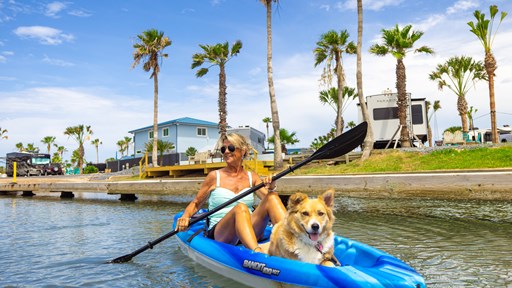





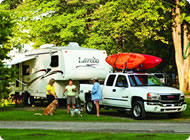


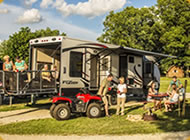

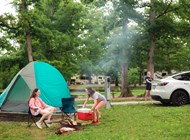

When we think of RVing, we often think in extremes: either quick vacations or full-time living. But there’s a sweet spot in between – where you book an extended stay, perhaps for a season of the year or a season of life. Whether you’re staying in your RV while you snowbird in a sunny destination, summer at a seasonal site, or travel the nation as a digital nomad or retiree, extended stay camping offers a whole new way to enjoy your RV, allowing you to spend more time at the campground and less time on the highway. Let’s explore how to plan for long-term camping stays.

What are the Advantages of Long-Term Camping Stays?
A long-term stay may offer a different style of camping than you’re accustomed to, but it offers many benefits.
Long-term camping stays allow you to:
- Spend less on gas
- Develop a daily routine without the interruptions of moving to new destinations
- Deeply explore an area, experiencing it more like a local than a tourist
- Receive discounts by booking by the month or season
- Find a community with other long-term RVers
- Spare your RV from the wear-and-tear caused by constant travel
- Appreciate the familiarity of a steady campsite
- Get the greatest use out of your RV investment
- Enjoy a different lifestyle for all or part of the year
- Spend more time in nature
- Stay in your familiar home on wheels due to a specific reason (such as traveling for family, medical care, a short-term job or training, college, or while building a home)

10 Tips for Planning a Long-Term Camping Stay
If you are considering a long-term camping stay, here are some tips to keep in mind:
- Be aware of campground policies. Most public campgrounds limit stays to approximately 14 days, with rules for how far you must move and how soon you may return, making them less convenient for long-term stays. Private campgrounds like KOA not only accommodate longer stays, but most also offer many onsite conveniences such as full hookup sites, laundry facilities, activities, and more. If you’re planning on camping at a KOA longer than 28 days, be sure to call your campground directly to make a reservation!
- Consider the long-term appeal of the campsite and campground setup. While you may be able to tolerate any space for a short stay, you may be pickier about a long-term stay. Is the natural environment appealing? Are the spaces well-maintained? Will the campground accommodate your pets? Are the sites suitable for your RV and style of camping? Are the onsite amenities desirable? Will you have access to the types of shops, restaurants, activities, and attractions you enjoy? Does the campground offer upgrades, like KOA’s Patio Sites and Paw Pen Sites?
- Do a trial run with a short-term stay. Before selecting a campground for a long-term stay, give it a test run to decide whether it is the place for you. Do you like the site setup? Is there a particular area of the campground that would be most appealing? Does the management match your expectations? Are you comfortable with the noise and activity levels? Can you imagine yourself here for weeks/months at a time?
- Consider the extra costs. While monthly or seasonal camping fees may be discounted and stated up front, ask whether there will be additional charges for electricity, water, internet, and/or other conveniences. Since some of these costs vary, ask the campground for an estimate.
- Pack differently than you would for a short trip. You may simultaneously need less stuff and more stuff. If you plan to do laundry while camping and will be in an area with less variation in the weather, you may be able to pack fewer clothes. Conversely, you may be less likely to eat out every day, so think about what a full kitchen set up looks like. Prioritize what you need for daily life rather than a vacation.
- Plan for long-term needs away from home. Consider how the long-term stay will impact important things like insurance coverage, medical care, prescription refills, mail, and more. Thoroughly think through many elements of everyday life, along with the “what-if” scenarios. Talk to your homeowners, automobile, and health insurance companies to ensure you have the right coverage.
- Don’t forget about your sticks-and-bricks home. If you are leaving a home behind, you’ll also need to plan for its care and maintenance. Prepare your house to be empty by turning off the main water supply, appropriately setting the HVAC, and contacting friends, neighbors, or professionals to keep an eye on your property.
- Build a budget. While on vacation, it’s natural to spend more on food, entertainment, souvenirs, and experiences. Unless your budget can handle it, you can’t treat an extended stay like a vacation. Carefully consider where you’ll save and where you’ll splurge, so your extended stay doesn’t break the bank. For a budget boost, consider becoming a work camper.
- Prepare for your pets. All KOA campgrounds have KampK9® dog parks, a dog-friendly, fenced area that gives your pups a designated place to run and play off the leash. Check out if your preferred campground has additional pet upgrades, like walking trails, pet sitting, on-site bathing facilities, and more. Also, consider whether your pet will show good behavior both in and outside of your RV, especially if left alone. Finally, talk with your vet to catch up on the care you need before you leave. Make a plan for handling medication refills and emergency care on the road.
- Be realistic about what you may miss. For some, a long-term stay takes you away from your everyday world, and you may miss some elements of that life. How will you stay connected with friends and families? Are there important holidays and events happening while you’re away? Are you a part of ongoing activities that you’ll miss? Be thoughtful about how you’ll handle these, so you are less likely to feel disconnected while away from home.
Bonus Tips for Snowbirds Planning an Extended Stay
- Decide on a destination. While some snowbirds seek endless summer, others appreciate cooler weather without the full wrath of winter. Consider whether you want to stay in a popular area, with lots of snowbirds, or whether you’d prefer to be off the beaten path. There are a variety of campgrounds all across the Sun Belt.
- Book early. Some snowbird destinations are incredibly popular and get fully booked months in advance. Find out when reservations open for your desired campground, which may be as early as a year in advance. Consider the cancellation policies, as life can change in the course of a year.
Bonus Tips for Digital Nomads Planning an Extended Stay
- Consider time zones when selecting a spot. If you have a job that requires set work hours, ensure they’ll work well with the adjusted time in your home away from home.
- Confirm your digital access. Wi-Fi and data coverage can vary greatly. Before booking a long-term stay, confirm your internet access will meet your needs, not only at the campground but also at your specific site.
- Check out workspaces nearby. If you want your workspace to extend beyond the walls of your traveling home, ensure your campground is close to restaurants, coffee shops, or libraries for some variety during your week.
Thanks to the cost savings, convenience, and adventure offered by long-term camping stays, many people make a regular tradition of planting roots away from their homebase, doing it year after year. Join in the fun and start planning your long-term getaway today!
About the Author: Kampgrounds of America
Kampgrounds of America is the largest system of open-to-the-public campgrounds in the world, with over 500 locations across the United States and Canada. Founded in Billings, MT in 1962, KOA’s family of campground brands – KOA Journey, KOA Holiday and KOA Resort – today serve more than a million camping families each year. KOA is dedicated to “connecting people to the outdoors and each other” by providing people with a variety of camping experiences and the information they need to make the most of their camping trip. Read more of their camping and travel resources by visiting KOA.com/blog.