













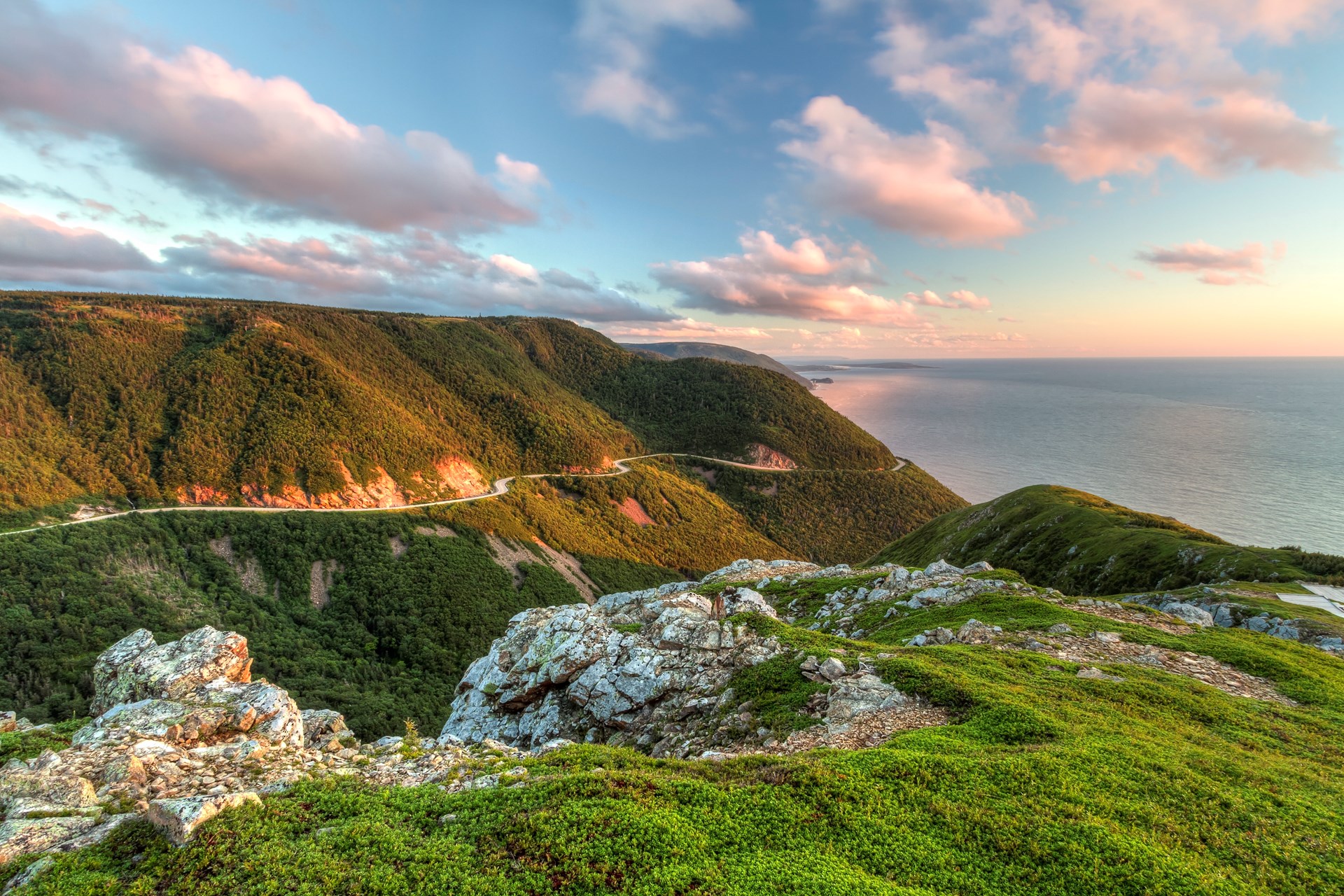
Some road trips are nice. You drive, see some sights, take a few pictures, and head home feeling good.
The Cabot Trail is different.
This 185-mile loop around Canada’s Cape Breton Island will make you stop every fifteen minutes to take it all in. You might find yourself thinking, “I had no idea the world could be this beautiful.”
Named after the Italian explorer John Cabot, who first arrived in the Maritimes in 1497, the trail winds through Cape Breton Highlands National Park. It hugs a coastline with rugged cliffs dropping steeply into the Atlantic. You will see vibrant landscapes, visit Acadian fishing villages where French feels like music, and spot wildlife that shows just how wild this area is.
And the locals? Atlantic Canadians are known for their warmth, and Cape Bretoners take pride in that. You’ll find strangers waving from their porches, shop owners asking about your trip, and the guy at the fish market eager to tell you the best way to cook the lobster you just bought.
Sound like your kind of place? Here’s how to make it happen!
Getting There
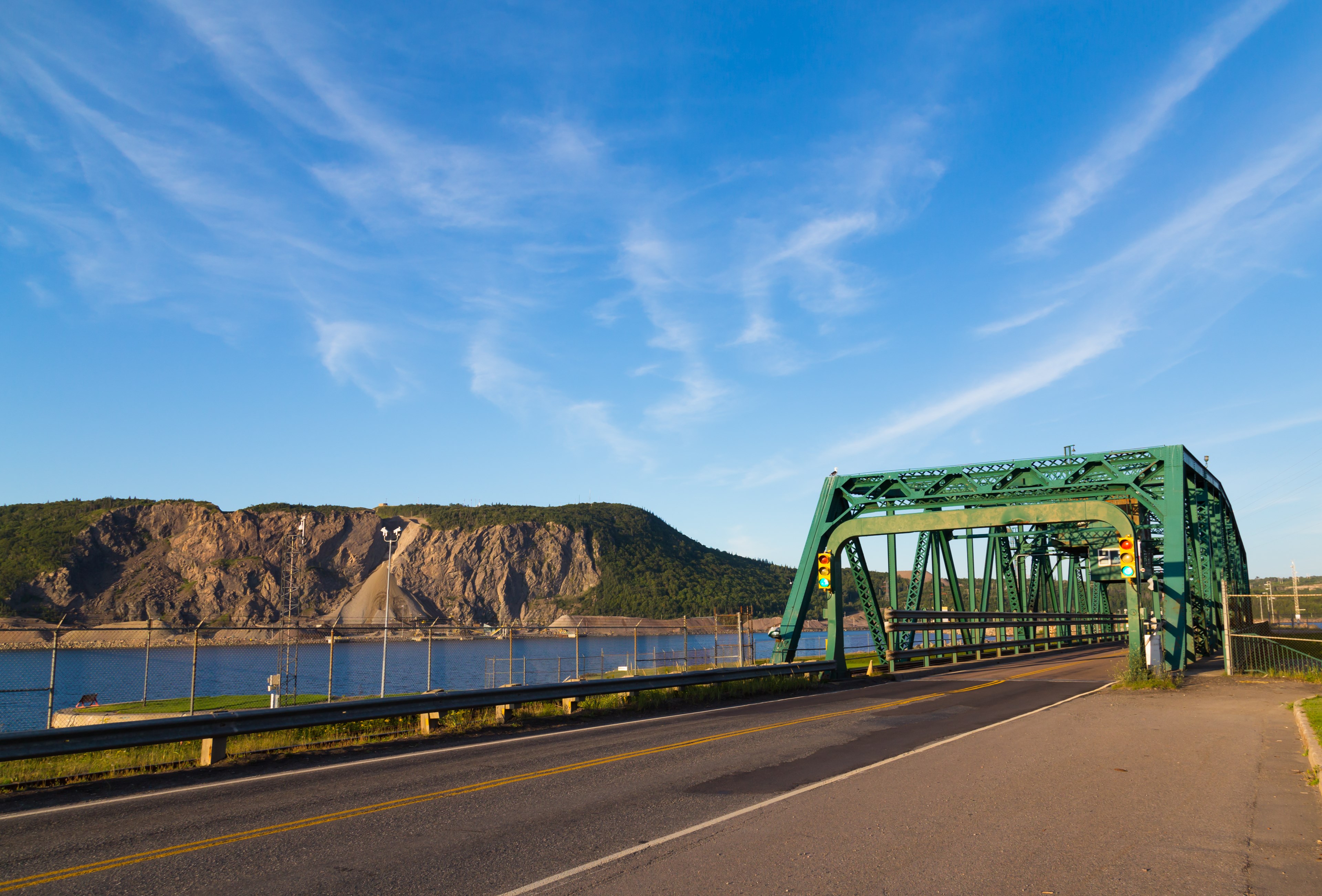
Cape Breton Island sits at the northeastern tip of Nova Scotia, connected to the mainland by the Canso Causeway. From Halifax, it takes about four hours through rolling farmland and quiet coastal towns to reach Baddeck, the most popular starting point for a Cabot Trail drive.
If traveling from the U.S., you’ll enter Canada through New Brunswick and continue on the Trans-Canada Highway. From the Maine border, expect about eight to nine hours of driving to reach Cape Breton.
If you’re coming from Newfoundland, there’s a ferry service. The North Sydney ferry terminal brings you right to the trail’s doorstep.
Right or Left?
Ask ten Cape Breton veterans which way to drive the loop – clockwise, or counterclockwise – and you’ll get ten passionate opinions. In reality, both directions are fantastic.
Clockwise keeps you on the inside lane during mountain sections, which some find easier on the steeper grades.
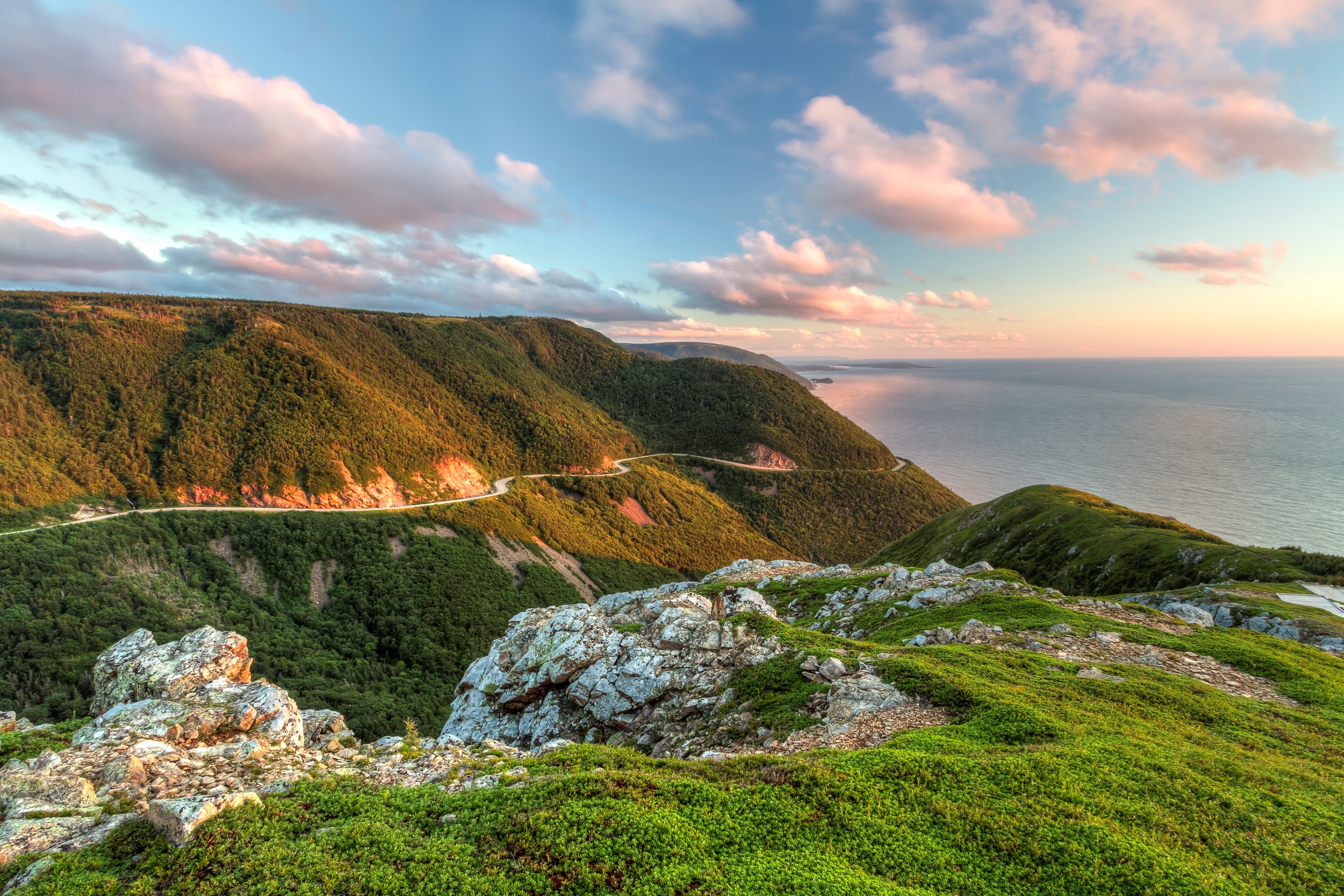
Counterclockwise puts you in the ocean-side lane, giving you uninterrupted views without turning your neck. Photographers often prefer to shoot counterclockwise, since the afternoon light hits the western coastline beautifully.
Our advice? Don’t stress about it. Choose a direction, go for it, and know you’ll likely drive some parts twice anyway because they’re just too awesome to see only once!
Stops That Matter
You could drive the whole loop in a day, but why cheat yourself? The Cabot Trail shares more of its magic with those who take their time. Here’s where to slow down.
Baddeck
This charming village of about a thousand people sits on the shores of Bras d’Or Lake, a UNESCO Biosphere Reserve. It’s the traditional starting point for the trail, so consider arriving a day early to explore.
The Alexander Graham Bell National Historic Site is a must-see. Bell fell in love with Cape Breton in 1885, saying it reminded him of his native Scotland. He built an estate and spent decades here, inventing everything from early aircraft to hydrofoils. The museum houses full-scale replicas of his “Silver Dart” (the first heavier-than-air craft to fly in the British Empire) and his HD-4 hydrofoil that set a world marine speed record in 1919.
Baddack’s main street invites wandering, with local shops selling everything from handcrafted jewelry to Celtic music recordings. Grab a coffee, find a bench overlooking the water, and relax while watching the sailboats drift by.
St. Ann’s Bay and the North Shore
Just north of Baddeck, the road begins winding around waterways and rolling hills as you enter St. Ann’s Bay and the North Shore. The communities along this stretch – North River, Tarbot, and Indian Brook – have a distinct character shaped by the Gaelic-speaking Scottish settlers who arrived centuries ago.
The crown jewel here is Gaelic College in St. Ann’s Bay, the only institution of its kind in North America. Founded in 1938 to preserve the language, music, and traditions of the Scottish Highlands, the college offers visitors a genuine window into Cape Breton’s Celtic soul.
The St. Ann’s area has also become synonymous with artisans and craftspeople. You’ll find glass blowers, woodworkers, pewter smiths, and leather workers with studios open to visitors. North River Kayak Tours offers guided paddles through the bay, and the 11-mile North River Falls Trail leads to the highest waterfall in Nova Scotia.
Don’t rush through St. Ann’s. It’s becoming a destination rather than just a drive-through, and guest book comments at local inns all say the same thing: “We should have stayed longer.”
Ingonish
As you enter Cape Breton Highlands National Park, Ingonish welcomes you with sandy beaches and towering mountains. It’s almost like postcards from two different locations were put together in this one place. The contrast is startling and beautiful, the kind of sight that makes you pull over just to confirm you’re actually seeing what you think you’re seeing.
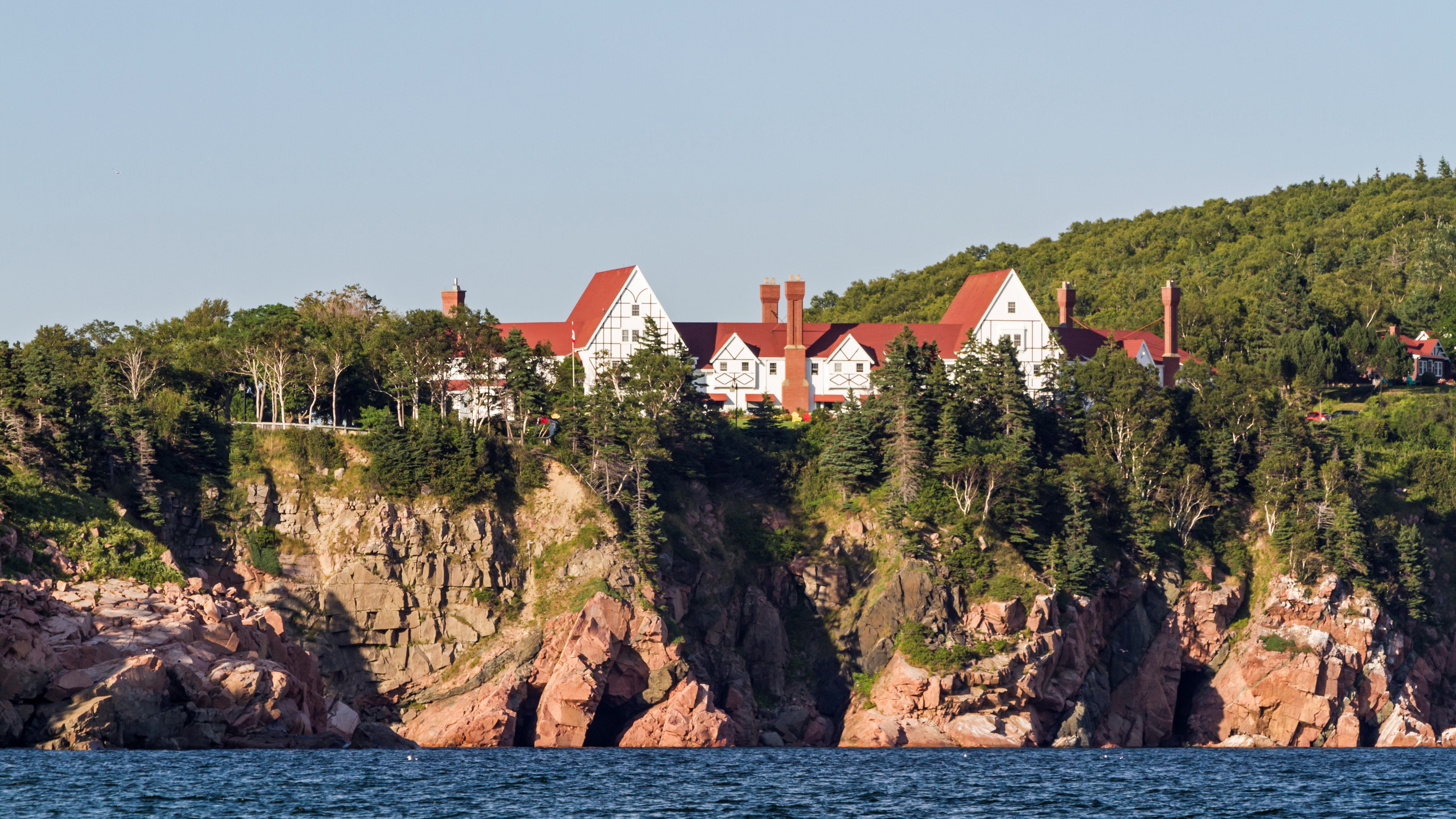
Perched on a red cliff, the Keltic Lodge is definitely worth a visit. Order a drink, find a seat with a view, and let the scenery sink in. For something more active, Atlantic Canada’s first gondola, the Cape Smokey, lifts you nearly a thousand feet to panoramic views that’ll make your phone’s camera work overtime. At the top, linger with a beverage and let the vastness sink in.
The Middle Head Trail, an easy two-hour walk, offers beautiful views and a chance to spot whales. Those up for a challenge may want to try the Franey Trail, a five-mile round trip with nearly 1,200 feet of elevation gain that rewards your effort with staggering views of Middle Head and the coastline. It’s tough, but worth it.
Neil’s Harbour
Some places feel frozen in time. Neil’s Harbour is one of them, with colorful fishing boats bobbing in the harbor, weathered wharves that have served generations of fishermen, and a red-and-white lighthouse standing watch over everything.
Inside that lighthouse? An ice cream shop. No, we’re not making this up! On a warm afternoon, you’ll find a line stretching out the door.
Plan your visit around lunchtime and be spoiled forever by the seafood chowder at The Chowder House. It’s creamy and full of fresh catch from the local waters. Portions are generous, and the unpretentious setting and harbor view just make everything all the more delicious.
Pleasant Bay
If you love whales (and who doesn’t?), Pleasant Bay is the place to be. This coast is known for whale sightings, including pilot, minke, and humpback whales, and many tours are available from May to October. The confluence of currents and underwater topography creates ideal feeding conditions that draw whales year after year.
The Whale Interpretive Centre helps you appreciate what you’re about to see with life-size models and tons of helpful information.
Chéticamp
This French Acadian fishing village marks the western entrance to the national park, and it feels like you’re crossing into a different country. You’ll hear French everywhere, and the community has kept its culture alive for over 400 years. Signs are bilingual, and the accent is unique.
Visit Les Trois Pignons Cultural Centre to learn about Acadian history and see beautiful hooked-rug artwork – intricate pieces of art that tell stories through wool.
For a worthwhile detour, drive out to Chéticamp Island and follow the two-mile gravel road to Enragée Point. You’ll be rewarded with spectacular views of the harbor and town, a picturesque lighthouse, and probably some curious cattle along the way. It’s the kind of unexpected side trip that ends up being a highlight.
And by all means, stop at Aucoin Bakery! Their pastries are incredible, the bread is delicious, and the coffee is just what you need for your next adventure.
The Skyline Trail
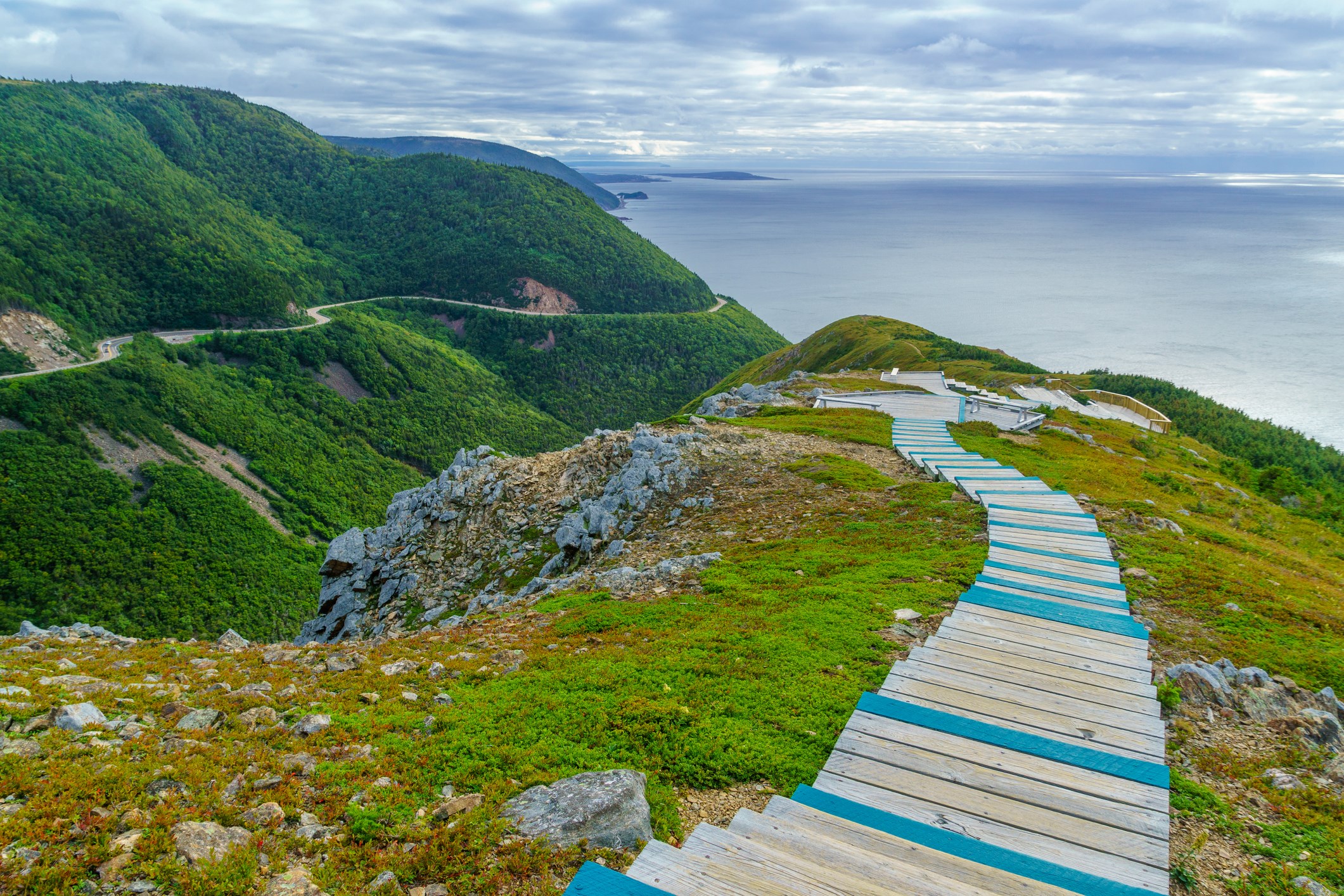
For many of us, Skyline Trail is the image that made us think about visiting Cape Breton in the first place.
You know, the one that shows the wooden boardwalk extending toward dramatic coastal cliffs, with the Cabot Trail looking impossibly small as it snakes down the mountain below, and the Gulf of St. Lawrence stretching to the horizon.
It’s one of Canada’s most photographed views – but standing there in person hits differently than any photo ever could.
The moderate-rated Skyline Trail is about 4 miles long and takes 2-3 hours to complete on foot. It winds through a boreal forest before emerging onto windswept headlands where the view just stops you in your tracks.
Moose sightings are common. They’re magnificent animals, but they’re huge, and they’re wild, so keep your distance, no matter how good the photo op looks. (Moose can truly move faster than you’d expect!)
Heads up: the parking lot fills up quickly during summer and fall, so plan to arrive before 9:30 AM or after 4 PM for the best chance at a spot. Just in case, have a backup plan – the Acadian and Corney Brook trails offer similar scenery but with fewer crowds.
The Margaree Valley
As you complete the loop and head back toward Baddeck, you’ll find that the dramatic coastline gives way to gentler river valleys, pastoral farmland, and an even slower pace. This is the Margaree Valley, and it deserves more than a rushed drive-through.
The communities of Margaree Forks, Margaree Harbour, and North East Margaree offer small general stores, local characters, and that distinct feeling of having discovered somewhere that tourism hasn’t yet overwhelmed.
But the Margaree River is why many people come here. This Canadian Heritage River is legendary among fly fishers worldwide, drawing anglers from June through October in pursuit of Atlantic salmon. The Margaree Salmon Museum tells the story through antique rods, reels, vintage flies, and photographs that capture decades of fishing heritage.
The 124-year-old Margaree Fish Hatchery is Nova Scotia’s oldest, producing over 250,000 Atlantic salmon and brook trout annually. Kids love feeding the fish in the outdoor ponds!
When to Go
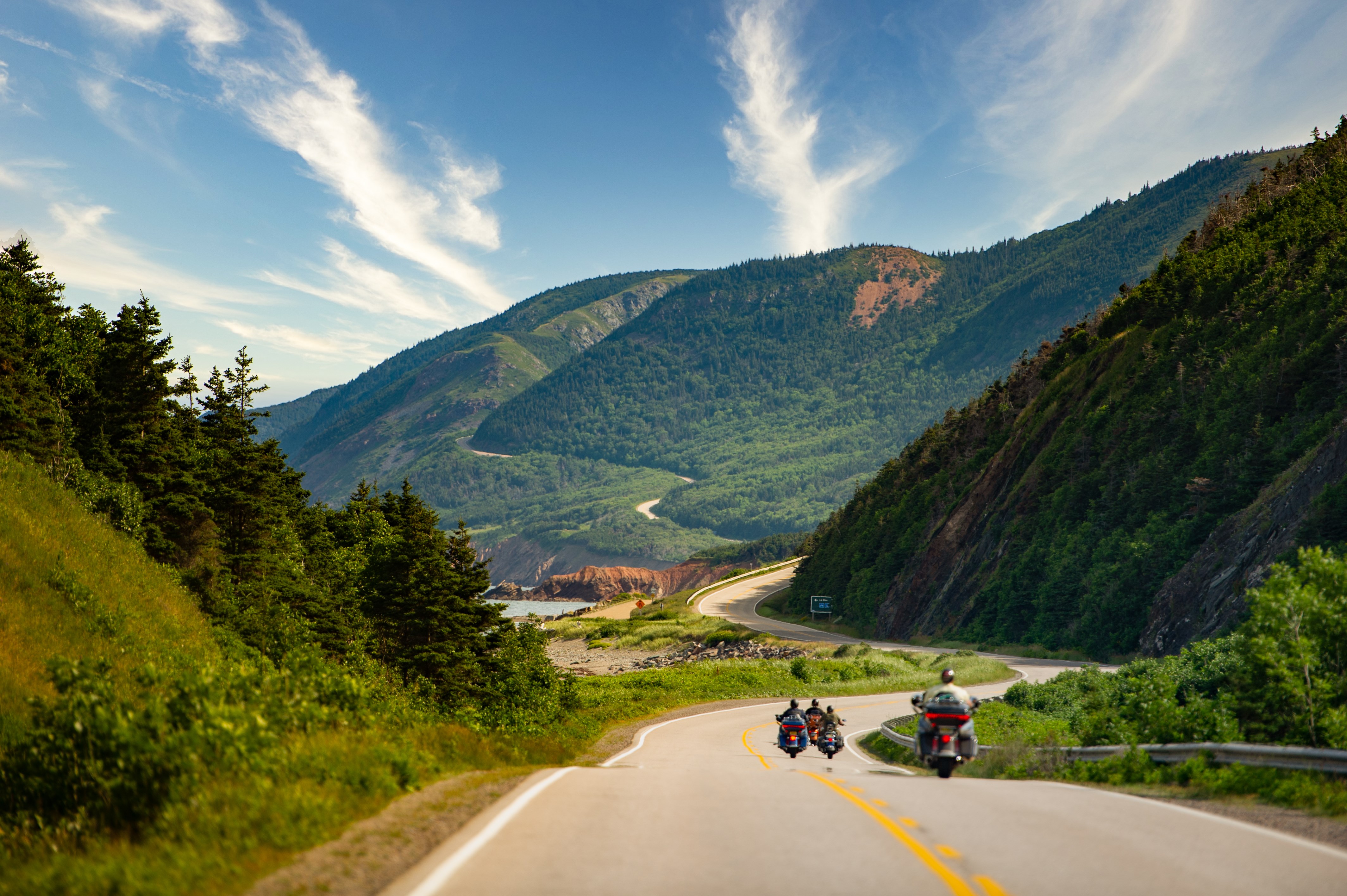
The Cabot Trail is drivable year-round, but peak season runs from late May to mid-October. The best time to go depends on what you’re looking for.
Summer brings warm weather and long days, and everything is open. Whale watching is at its peak. Popular spots can get crowded, though, so early mornings and late afternoons are your friends.
Fall is when Cape Breton really shines! The highlands burst into one of the most beautiful foliage displays in eastern North America. If you can, go during The Celtic Colours International Festival, which celebrates Cape Breton’s rich culture each October.
Late spring brings a remarkable calm, with fewer tourists and lovely wildflowers. Some businesses may still be getting ready for the season, and you may not see many whales, and the weather can be a bit unpredictable – but the peaceful atmosphere is truly charming.
Experiences You Don’t Want to Miss
There are some experiences along the Cabot Trail that you simply can’t pass up. Not because a guidebook says so, but because you’ll cherish the memories.
First, try the lobster. Nova Scotia lobster is known for its sweet and tender taste, fresh from the cold Atlantic waters. Enjoy it in lobster rolls, at a lobster supper, or even as a whole boiled lobster with melted butter. Baddeck Lobster Suppers (Baddeck) and the Rusty Anchor (Pleasant Bay) are popular spots, but you’ll find delicious lobster all over the island. Order it, embrace the mess, and savor every bite!
Make sure to attend a ceilidh. These traditional Celtic gatherings, pronounced “KAY-lee,” bring together fiddle music, step dancing, and storytelling, connecting you with Cape Breton’s Scottish roots. The Gaelic College in St. Ann’s Bay hosts regular ceilidhs in the summer. Even if you’re not familiar with Celtic culture, watching talented musicians and dancers celebrate their traditions is truly moving.
Consider taking a detour to Meat Cove. Just 45 minutes off the main path, this northernmost community in Nova Scotia offers gorgeous coastal views. The road can be a bit bumpy, so be mindful of your vehicle’s limits. But standing at the edge of the province, where the land meets the sea, can be a transformative experience. It’s definitely worth the journey.
The Magic of the Cabot Trail
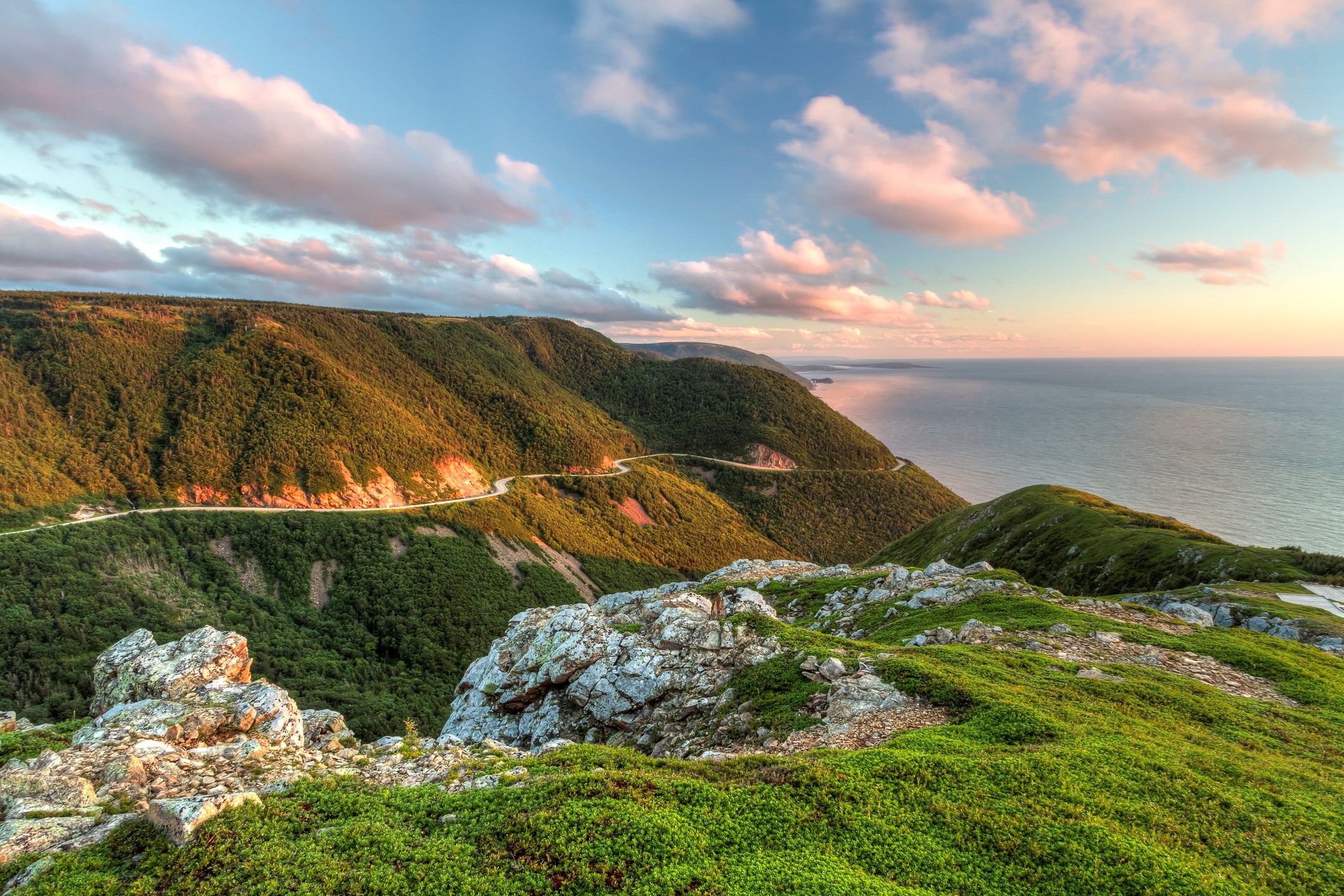
The Cabot Trail has a way of changing you, even if just a little.
Not in a huge, life-changing way. Unlike Alexander Graham Bell, you probably won’t move to Cape Breton. But standing on those cliffs, watching whales leap in the Atlantic, listening to fiddle music float from a village hall, and enjoying the best chowder in a cozy harbor town can really shift your perspective.
You may find yourself reconnecting with all the reasons you love to travel. There are some places that still feel wild and authentic, existing on their own terms, and the Cabot Trail is definitely one of them.
So go ahead! Drive the loop. Stop often. Talk to locals. Eat lots of lobster. Stand at the edge of the Skyline Trail until the wind takes your breath away.
And remember just how beautiful the world really is.
KOAs in Nova Scotia:
Halifax West KOA
North Sydney / Cabot Trail KOA
Truro / Tidal Bore KOA Holiday

Leslie is a freelance travel and health/wellness writer who gets butterflies from telling stories and sharing information with readers across the globe. Her voice comes from a place filled with passion and dreams.
With over 10 years of experience in crafting words and years of embarking on travels that have taken this Montana girl to some incredible places, Leslie loves the adventures of both body and mind that her writing takes her on.
To see what Leslie’s up to in the writing and design world, visit her website here.