


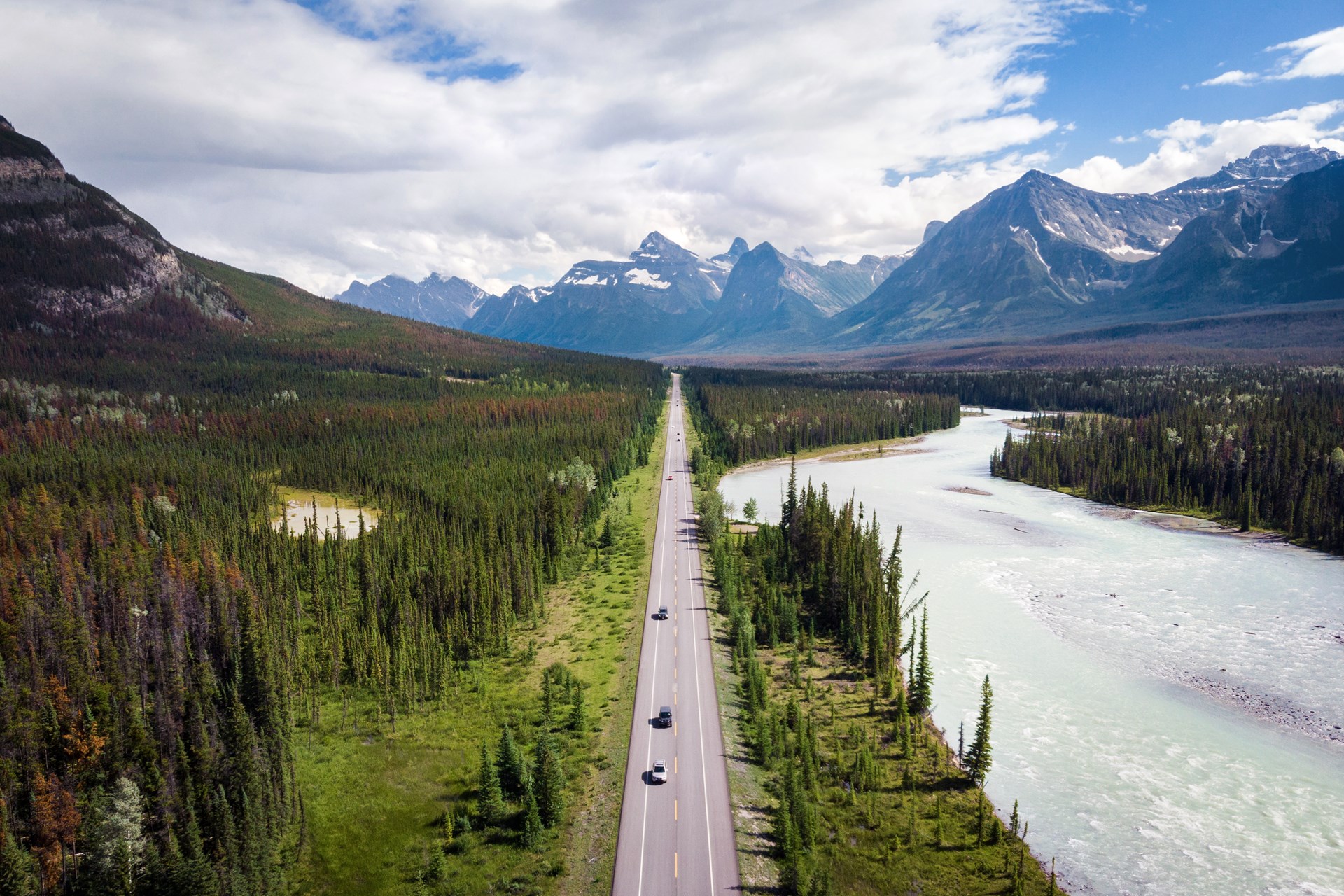
There are road trips, and then there are transformations on wheels. The Icefields Parkway in Alberta is firmly the latter; the kind of drive where you pull over for the hundredth time and just gape, awestruck, regardless of how many photos you may have pored over while planning the journey!
Stretching about 140 miles through the heart of the Canadian Rockies, the Icefields Parkway (Highway 93 North) connects the village of Lake Louise to the town of Jasper. It’s a well-maintained, two-lane highway that runs entirely through two of the most spectacular national parks on the planet – Banff and Jasper.
National Geographic has called this one of the world’s most scenic drives. Travel writers run out of adjectives. Locals who’ve driven it a hundred times still pull over to stare.
For RV owners and camping enthusiasts, the Icelands Parkway isn’t just doable, it’s downright dreamy! The drive itself can be completed in three to four hours if you push through, but that would be a crime. Most RVers and campers spend two to five days on the route, and honestly, a week isn’t unreasonable. There’s simply that much to see.
Here’s everything you need to know to make this bucket-list drive a reality.
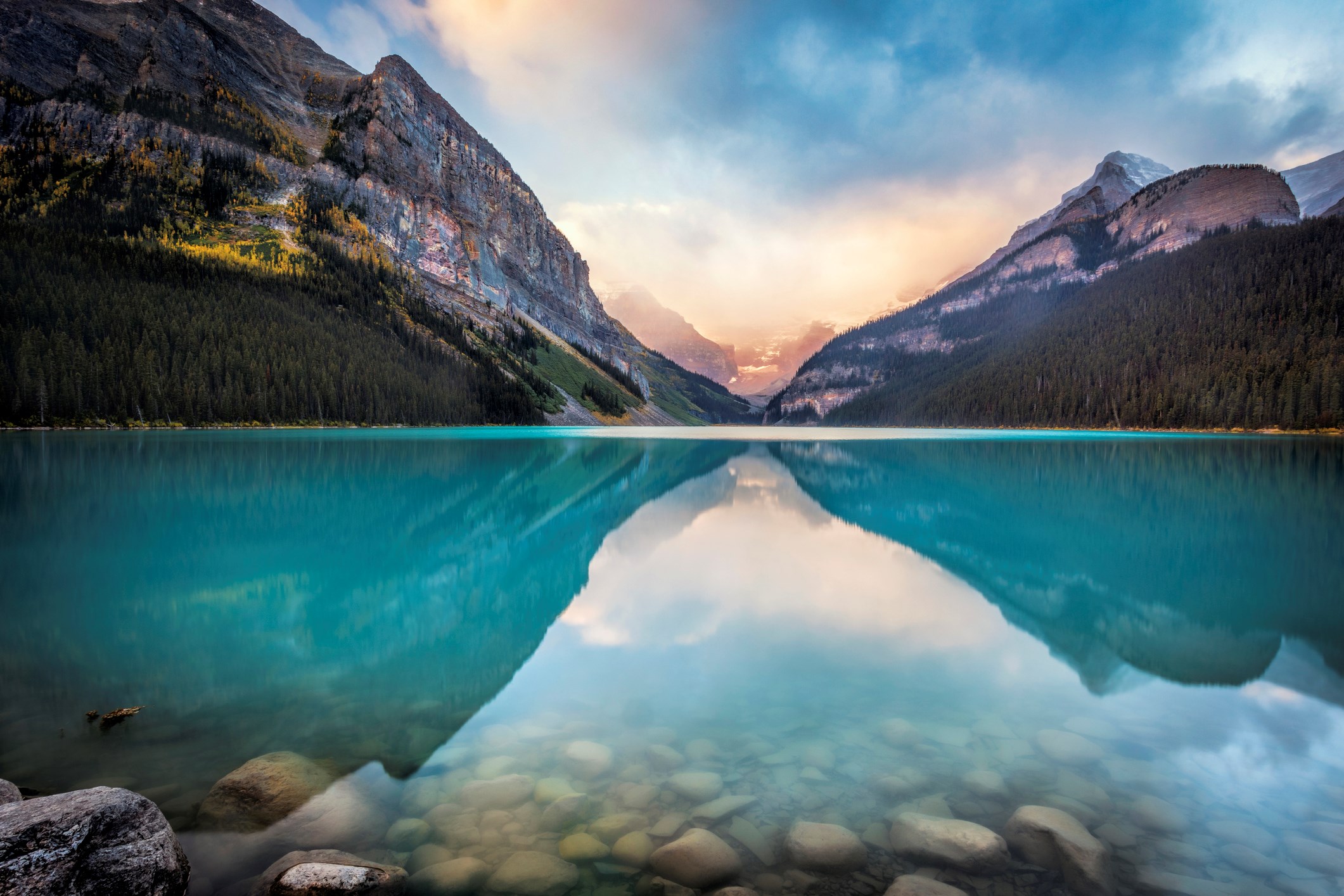
Start at the Southern End: Lake Louise
With vivid, glacially fed turquoise water backed by the Victoria Glacier and the stately Fairmont Chateau, Lake Louise is one of those places that defies expectation. It’s simply more beautiful in person, period! Plan to spend at least a half-day here, and try to arrive before 8:00 AM to beat the crowds and catch the best light.
Take the time to walk the lakeshore trail. It’s relatively flat, accessible to most fitness levels, and rewards you with changing perspectives on the glacier and the surrounding peaks with every quarter mile. If you’re feeling more ambitious, the Plain of Six Glaciers Trail pushes further back into the valley for close-up views of the glacier itself and a historic teahouse at the far end that has been serving hikers since 1927.
Lake Louise village is worth a stroll, too. You’ll find a small but solid collection of shops, including outdoor gear outfitters well-stocked for anything the mountains might throw at you. Grab a coffee and a fresh-baked treat from one of the village bakeries, fill your water bottles, and top off any supplies before heading north.
Just a short drive southwest of the village, Moraine Lake sits in the Valley of the Ten Peaks and delivers arguably the most iconic view in all of the Canadian Rockies! The vivid blue-green water is the result of “rock flour” (fine glacial sediment) suspended in the water, which reflects light in an almost supernatural way. The short Rockpile Trail is essential: just 15 minutes of easy walking takes you to the viewpoint that once graced the back of the Canadian $20 bill.
Due to their overwhelming popularity, Parks Canada has implemented a reservation and shuttle system for Lake Louise and Moraine Lake during peak season. Check current access requirements when planning your visit.
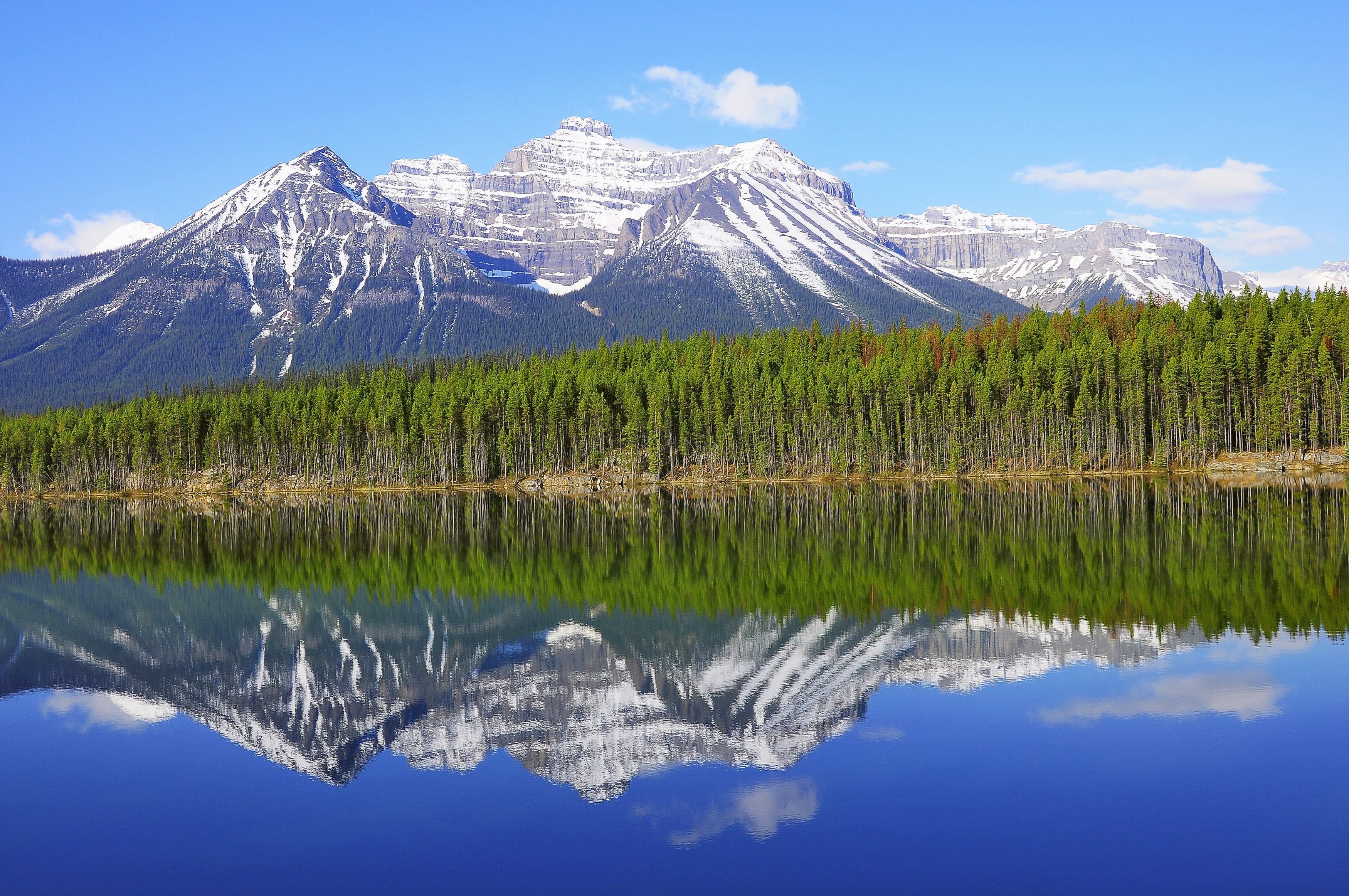
Between Lake Louise and Bow Lake
Once you head north out of Lake Louise, the parkway starts flexing immediately. Herbert Lake, just a few miles up the road, is easy to drive past if you’re not paying attention. On a calm morning, this small lake produces mirror-perfect reflections of the surrounding peaks, making it a genuinely magical stop, especially for early risers.
A bit further along, the Hector Lake turnout is worth a pause. You can’t drive to the water’s edge here, but a short walk through the trees opens onto a sweeping view of one of the parkway’s largest and most beautiful lakes, with the Continental Divide rising behind it. It’s quieter than most other stops, and that solitude is half the appeal.
Continue along and you’ll soon pass the Weeping Wall, a long cliff face on the eastern side of the road that seeps a curtain of water throughout the summer. (In winter, it transforms into a dramatic frozen cascade that draws ice climbers from around the world.) Even in peak season, it’s worth a slow roll past with your window down.
Bow Lake and Num-Ti-Jah Lodge
Twenty miles north of Lake Louise, you’ll hit Bow Lake, your next major “pull over immediately” moment. It’s one of the largest lakes along the route, fed by the Bow Glacier above it, and on a calm day, the reflections are absolutely surreal!
If you have the legs for it, a moderate two-hour round-trip hike leads up to Bow Glacier Falls, where a dramatic cascade pours off the icefield above. The trail gains some elevation but is manageable for most hikers, and the payoff at the top is outstanding.
On the shoreline, the historic red-roofed Num-Ti-Jah Lodge – built in 1920 by legendary Canadian outfitter Jimmy Simpson – makes for a classic photo and a genuinely interesting stop. Step inside to take in the beautiful log architecture and Jimmy Simpson’s old outfitter memorabilia on display. The lodge also has a dining room open to non-guests, where you can sit down to a full meal with mountain views through floor-to-ceiling windows. It’s a surprisingly civilized mid-journey treat!
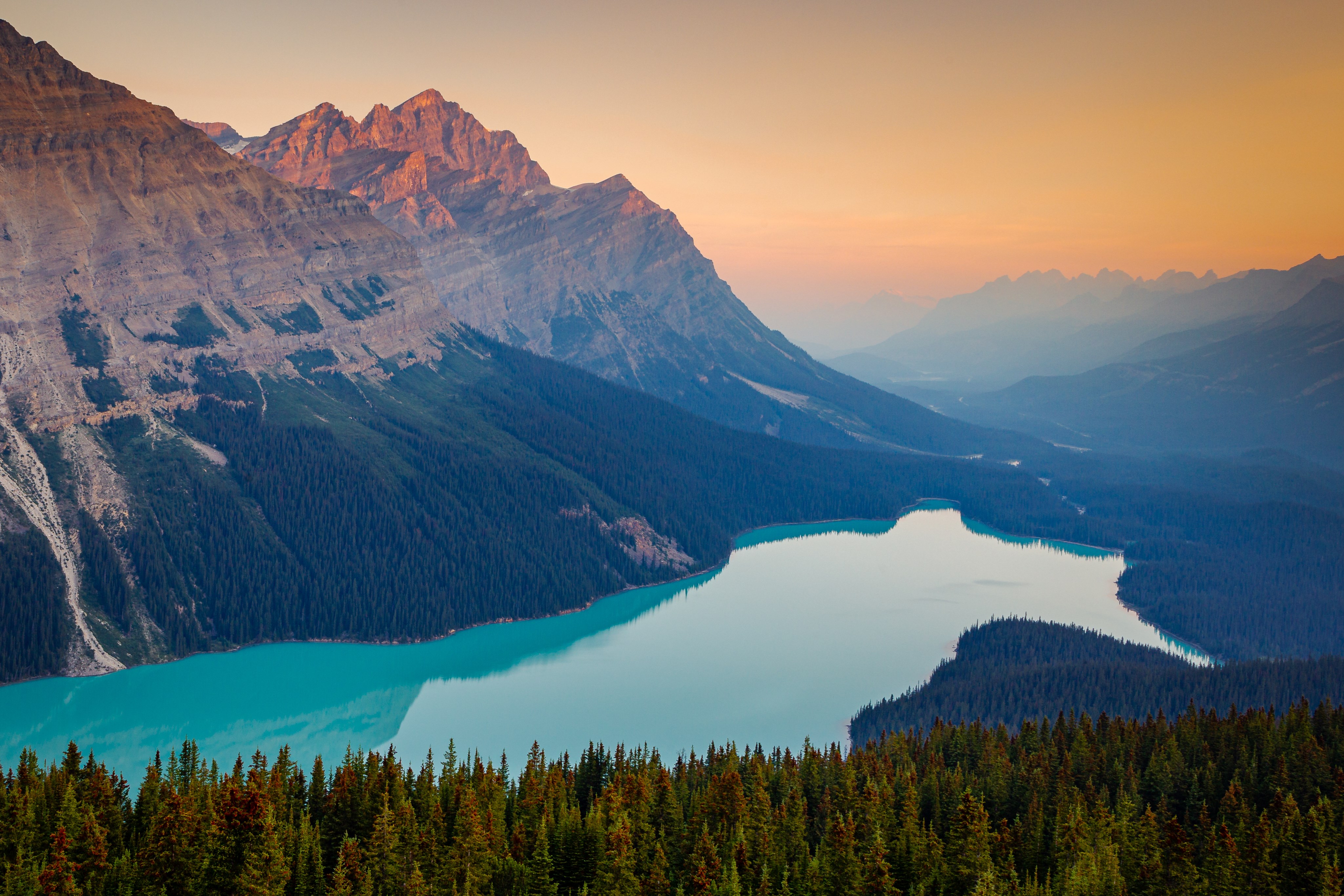
Peyto Lake Overlook
North of Bow Lake, watch for the turnoff to Peyto Lake. Named after legendary Banff guide and trapper Bill Peyto, the lake is as much a part of Canadian mountain mythology as it is a geographic marvel.
A short but moderately steep walk from the parking area leads to the Bow Summit Lookout, the highest drivable point on the entire parkway at nearly 6,900 feet above sea level. From the top, you’ll notice that the lake is shaped vaguely like a wolf’s head – and its color, that same impossible blue-green as Lakes Louise and Moraine, seems even more vivid set against the panoramic sweep of surrounding peaks and glaciers. On a clear day, the view is just staggering! Budget at least 45 minutes here.
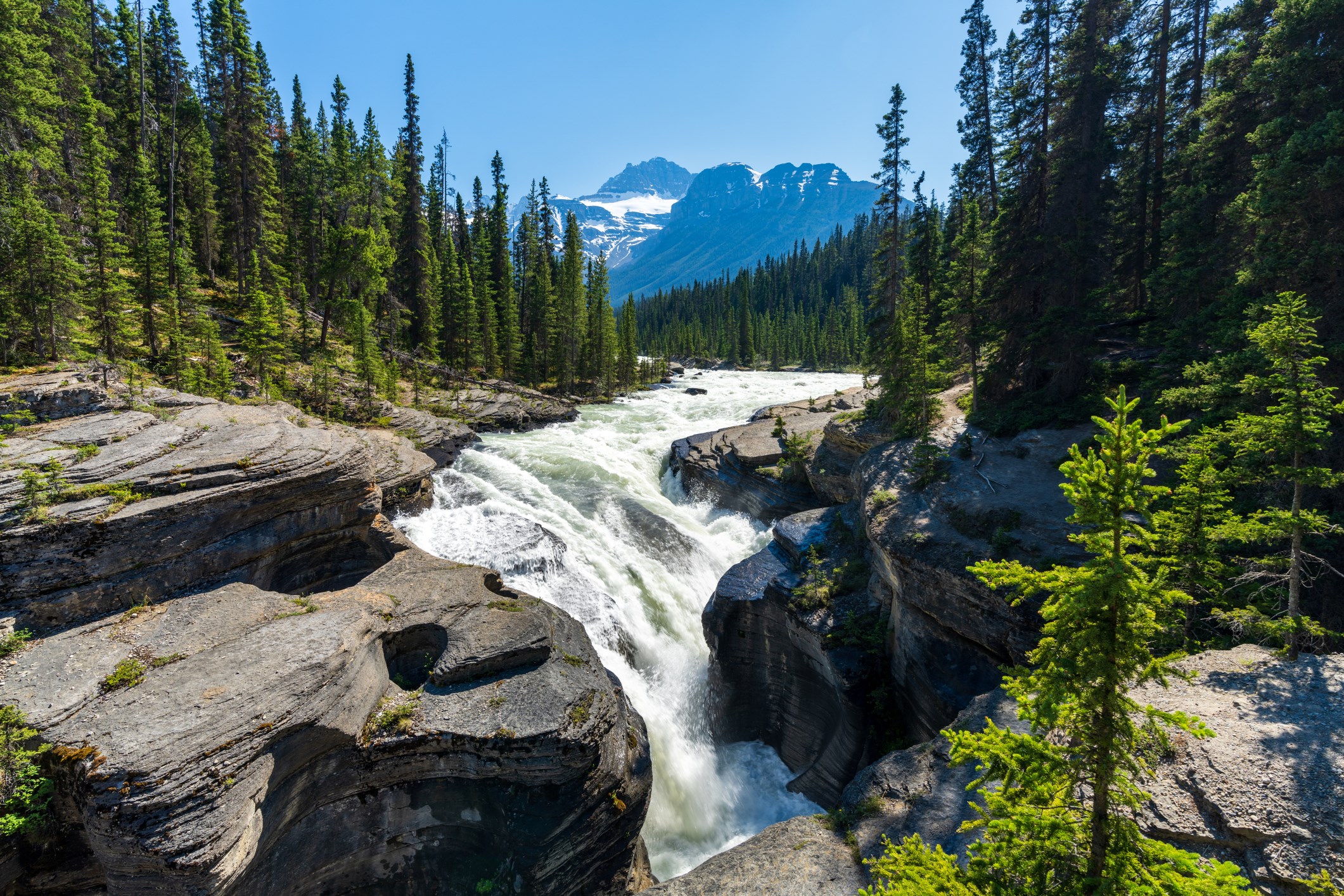
Mistaya Canyon
Just under 50 miles north of Lake Louise, the Mistaya Canyon trailhead sits beside the highway and is easy to miss if you’re not watching for it. A 10-minute walk along an easy trail drops you into a narrow, sculpted limestone gorge where the Mistaya River has carved a series of natural potholes and chutes over thousands of years. The layered rock walls close in tight, the river roars between them, and the whole scene looks like something out of a fantasy film.
The round-trip experience takes about 30 minutes, fits perfectly between bigger stops, and consistently impresses even seasoned travelers. Put it on your list!
The Columbia Icefield
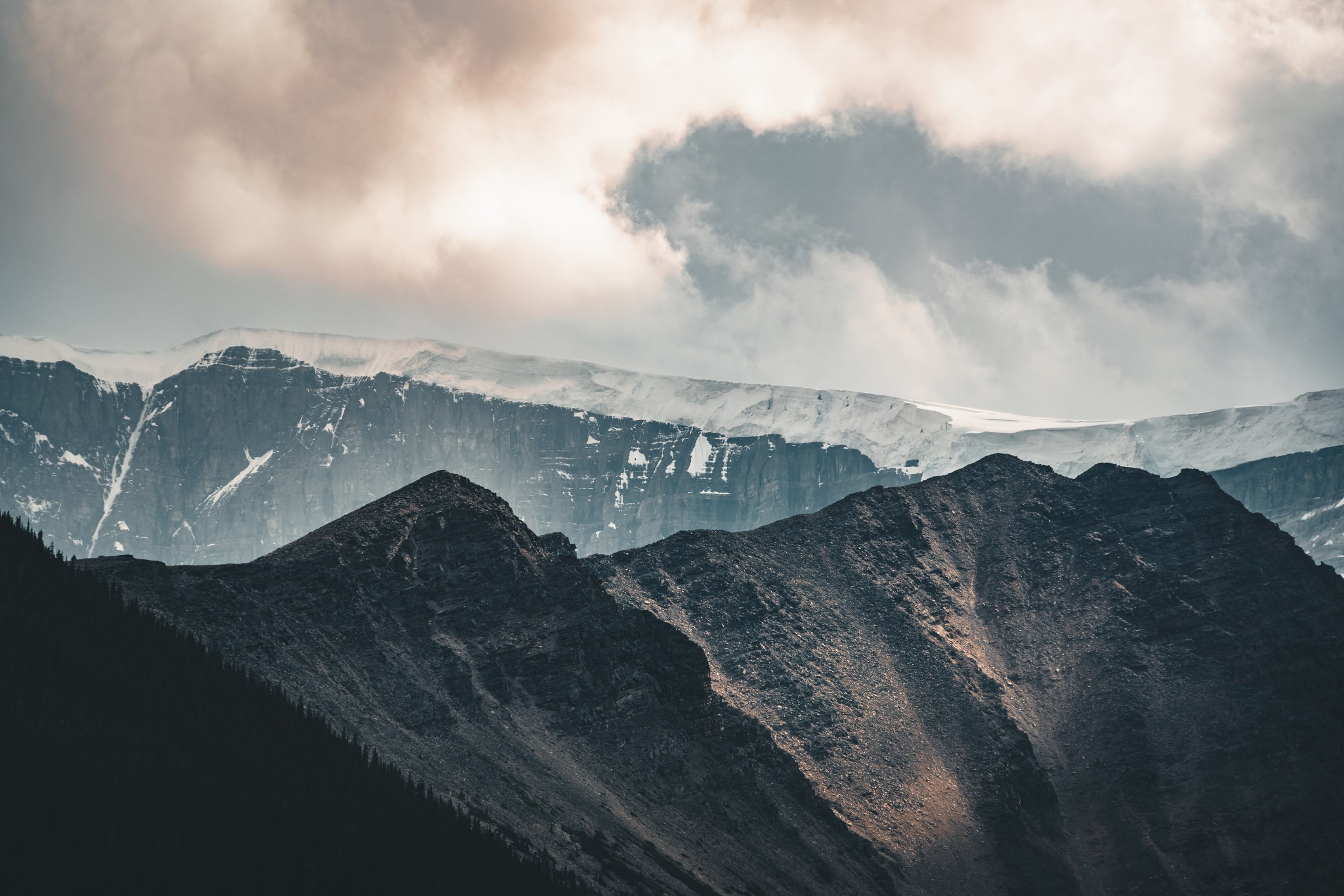
At roughly the parkway’s midpoint sits the Columbia Icefield, the largest icefield in the Rocky Mountains south of Alaska. Unquestionably the centerpiece of the entire drive, it deserves your full attention and a significant chunk of time.
The Columbia Icefield covers approximately 125 square miles and feeds eight major glaciers, which in turn drain into three different oceans. Let that sink in! The water from the snowfall that lands on this icefield eventually makes its way to the Pacific, Atlantic, and Arctic oceans. It’s the triple continental divide of North America, all compressed into one incredibly beautiful landscape.
The Athabasca Glacier is the most accessible, flowing down to a point where you can walk up and touch ice that has accumulated over hundreds of years. Interpretive signs along the trail mark where the glacier’s edge once stood, providing a sobering visual timeline of how dramatically and quickly it has retreated. Even if the science feels distant, those stone markers don’t.
Whether you walk to the glacier’s toe on your own or book a guided tour on a specially designed vehicle that takes you up onto the ice, plan at least two to three hours here.
The Columbia Icefield Discovery Centre, operated by Pursuit, sits right along the highway and serves as the gateway to the glacier and the surrounding region. It has a hotel, restaurant, café, and excellent interpretive exhibits on the icefield, glaciology, and the natural history of the Canadian Rockies. For RV parking, there’s a large adjacent parking lot.
Glacier Skywalk
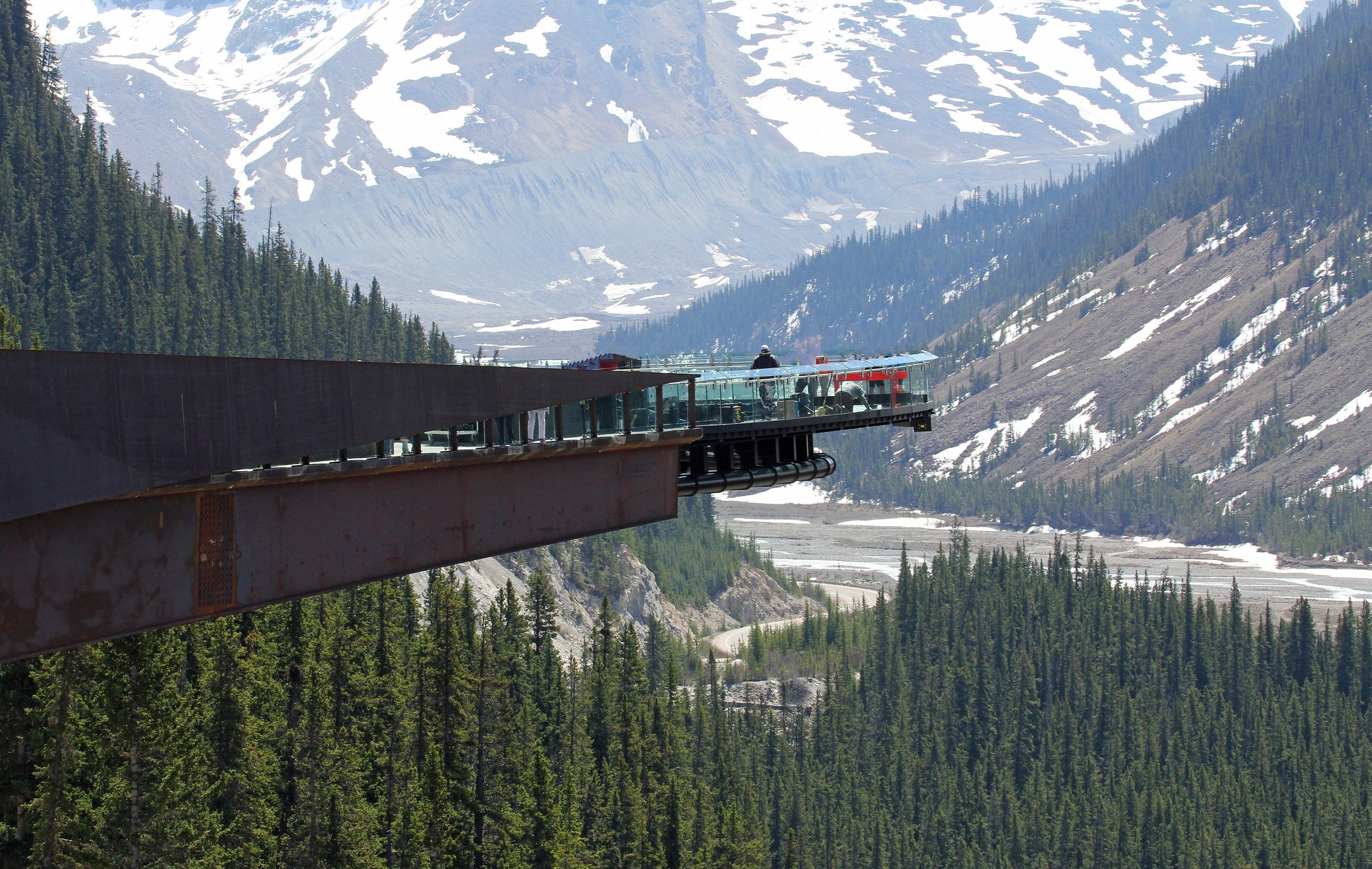
Just a short drive south of Jasper, a cliff-edge walkway extends out over the Sunwapta Valley, culminating in a glass-floored observation platform more than 900 feet above the valley floor. It’s the Glacier Skywalk, a ticketed attraction that’s absolutely worth the admission price. Plan to spend about an hour here – you’ll be talking about it for years!
Standing on that glass (or hanging back while your more adventurous companions press their noses against it) is a genuine test of nerve. The views of surrounding glaciers, the valley below, and the peaks stretching into the distance are breathtaking in every direction. The Skywalk is operated by the same Pursuit group as the Icefield Discovery Centre, and combo tickets are available.
Sunwapta and Athabasca Falls
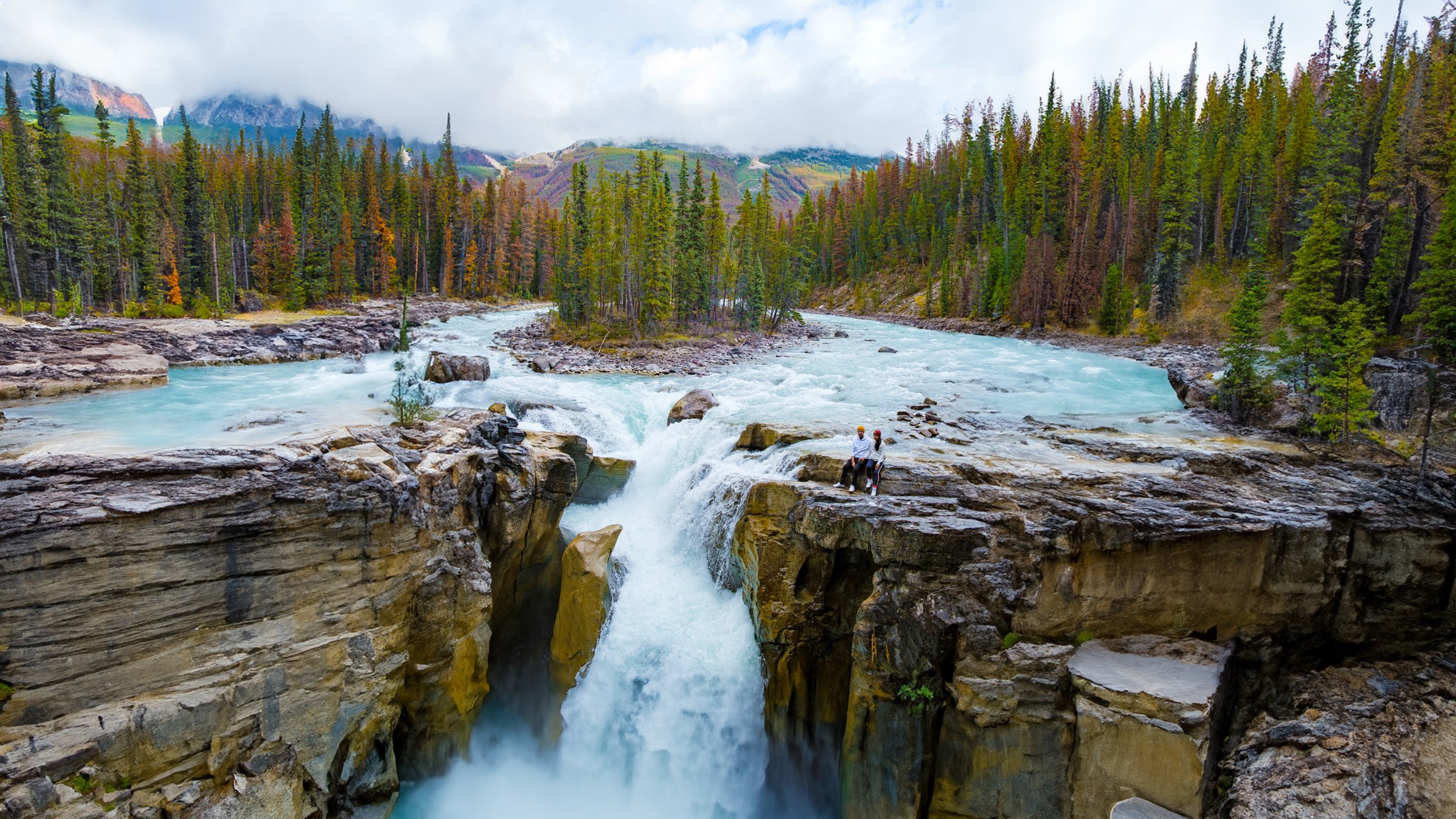
As you get closer to Jasper, the parkway delivers two world-class waterfalls in quick succession. Both have parking areas suitable for most RVs, and both are mandatory stops.
Sunwapta Falls drops into a narrow canyon with a furious roar you can hear from the parking lot long before you see it! The main upper falls are spectacular, but don’t skip the short trail to the lower falls – they offer a different, arguably more dramatic perspective on the canyon that a lot of visitors miss entirely.
Further north, Athabasca Falls is one of the most powerful waterfalls in the entire Canadian Rockies, with the Athabasca River squeezing through a narrow gorge in a thundering torrent of whitewater that has carved potholes and channels into the ancient bedrock over millennia. The interpretive trails here are excellent and accessible for most fitness levels. Walk every one of them, and you’ll understand why photographers consider this one of the most compelling locations on the entire parkway.
Dark Sky Preserve
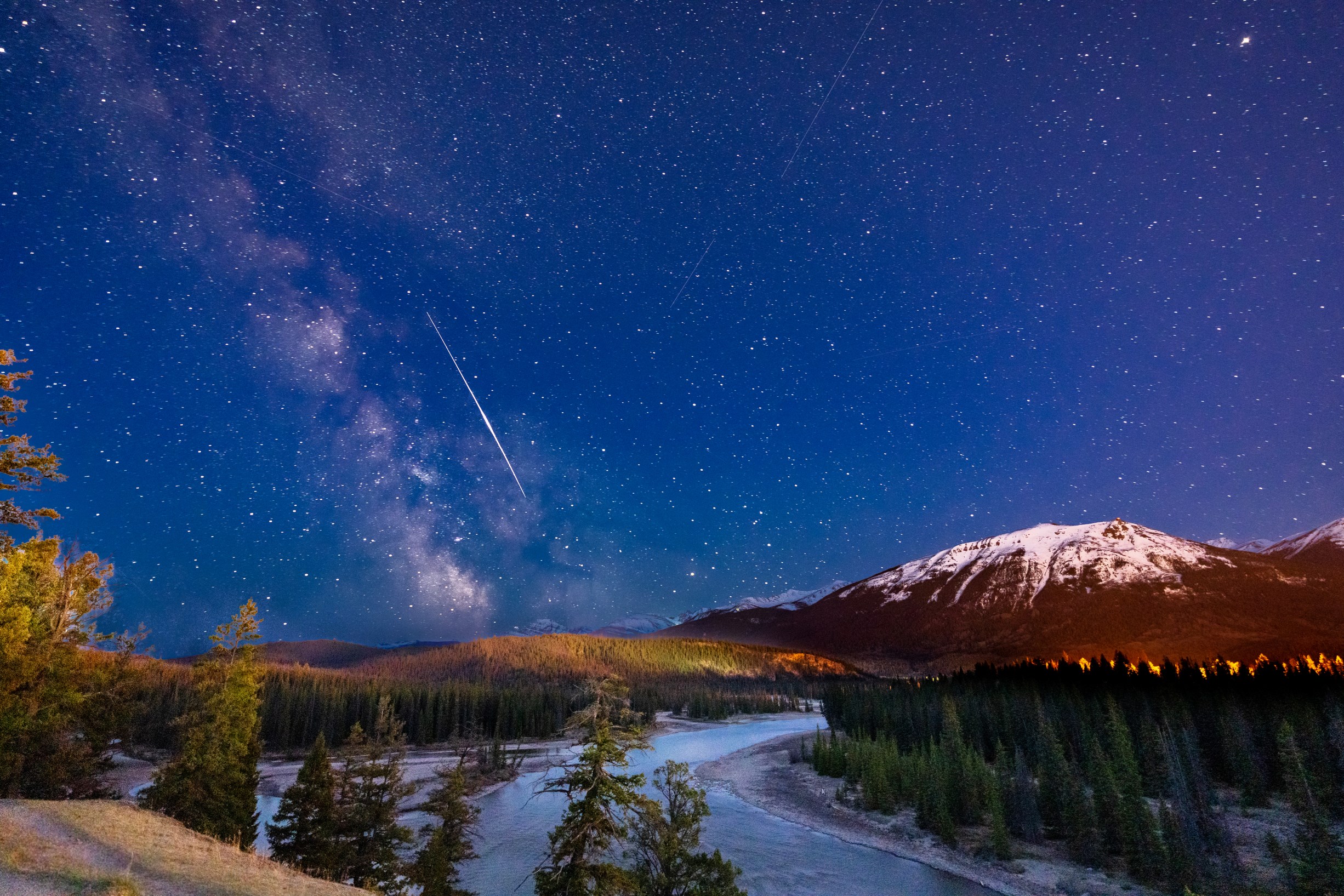
As you near the end of the parkway and the lights of Jasper come into view, resist the urge to call it a day too early. A UNESCO World Heritage Site, Jasper National Park is the second largest Dark Sky Preserve in the world, and the near-total absence of light pollution in and around the park makes for some of the most spectacular stargazing in North America.
On a clear night, the Milky Way stretches overhead in a way that most of us raised near cities have genuinely never seen! Pull off at any of the roadside turnouts, kill your headlights, give your eyes five minutes to adjust, and look up. The show above will rival anything you saw during the day.
Keep Your Eyes (and Camera) Peeled
The Icefields Parkway runs through prime habitat for some of North America’s most iconic wildlife. Elk are practically roadside regulars, especially near Jasper. Black bears and grizzly bears are spotted frequently, particularly in spring and early summer. Mountain goats and bighorn sheep are often seen near rocky terrain and mineral licks along the highway. Lucky travelers spot wolves, moose, and woodland caribou as well.
Wildlife jams – where a line of vehicles stops to watch an animal near the road – are a parkway tradition. If you decide to stop for a while, pull completely off the road, use binoculars or a zoom lens, and resist every urge to approach. These are wild animals in their home environment. Keep it that way for them and for the people who follow after you.
Eat, Explore, Refuel
The town of Jasper, at the northern end of the parkway, is a worthy destination in its own right. After a day or more of unbelievably beautiful scenery and hiking, the prospect of a sit-down meal and some leisurely browsing feels genuinely earned!
Shopping in Jasper reflects the spirit of the place. You’ll find quality outdoor gear, locally made goods, and Canadian-made souvenirs that aren’t the usual tourist fodder. The Jasper Heritage and Cultural District houses a handful of galleries featuring work from local and regional artists inspired by the surrounding landscape. If you need to resupply your camp kitchen, there are several well-stocked, RV-friendly grocery stores with plenty of nearby parking.
For dining, Evil Dave’s Grill is a Jasper institution – expect a wait on summer evenings, but it’s worth it. The Downstream Bar and Grill is another local favorite with a welcoming vibe and a wide menu. For a casual grab-and-go, Bear’s Paw Bakery has been turning out exceptional pastries, breads, and coffee for years. Stop by in the morning before heading back out onto the parkway and you won’t regret it!
Don’t leave Jasper without swinging by the Jasper Brewing Company, which has the distinction of being the first brew pub inside any Canadian national park. Their ales and IPAs are well-regarded, and they offer some of the best casual dining in town – a great place to raise a glass and toast to what you’ve just experienced.
Best Times to Go
Late June through early September is peak season, with the warmest temperatures, all facilities open, and maximum daylight. The downside is crowds and competition for parking. Book shuttles and any ticketed attractions as far in advance as possible.
Late September and early October are also gorgeous times to travel the parkway. The larch trees at higher elevations turn a brilliant gold, the crowds thin considerably, and the light takes on that magical autumn quality photographers dream about. Temperatures drop, so pack accordingly – but the trade-off in solitude and scenery can be absolutely worth it.
Practical Tips Before You Roll Out
To access the national parks, get a Parks Canada Discovery Pass either online in advance or at the park gates. The pass covers both Banff and Jasper and pays for itself quickly, especially if you’re planning a multi-day trip – which you absolutely should!
Cell service is limited for most of the route. Download offline maps before you leave, let the folks at home know your itinerary, and consider carrying a paper backup. Even in July, temperatures near the icefield can be cool and windy, and the weather can change very quickly. Pack layers and rain gear regardless of the forecast.
Bear spray is a must! Pick some up in Banff or Jasper and, seriously, know how to use it before you hit a trail. At a minimum, carry it any time you’re on foot in the backcountry.
RVs up to about 40 feet long will face no major issues navigating the parkway, although some pull-off parking areas will be tight. Longer rigs should plan ahead for popular overlooks. And one critical reminder: there are no fuel stations between Lake Louise and Jasper, so fill your tank and any extra fuel containers before you start.
Finally, the drive genuinely rewards both directions. If your schedule allows, consider driving the route north to south after going south to north. The views from the opposite lane are genuinely different, the light falls differently at different times of day, and you’ll almost certainly notice things you missed on the first pass.
The Canadian Rockies Await You
Some bucket-list trips lose their luster once you actually do them. The Icefields Parkway is not one of those. Former visitors don’t just say they’re glad they did it – many start planning their return trip somewhere around the Athabasca Glacier on the drive home. It’s that kind of place.
The combination of raw, accessible wilderness, world-class scenery, genuine adventure opportunities, small-town charm at either end, and the freedom to roll through it all in your own RV or tent makes the Icefields Parkway in Alberta one of the truly great North American road trips.
Nearest KOAs to the Icefields Parkway:
Hinton / Jasper KOA Holiday
Drumheller / Dinosaur Trail KOA Holiday
Cranbrook / St. Eugene KOA Journey

Leslie is a freelance travel and health/wellness writer who gets butterflies from telling stories and sharing information with readers across the globe. Her voice comes from a place filled with passion and dreams.
With over 10 years of experience in crafting words and years of embarking on travels that have taken this Montana girl to some incredible places, Leslie loves the adventures of both body and mind that her writing takes her on.
To see what Leslie’s up to in the writing and design world, visit her website here.