












The trend “Noctourism” (which we like to define as the joy of exploring the world after dark) isn’t going anywhere in 2026, especially for travelers who want an experience that feels inspiring and at the end of the day quite simple: look up.
From meteor showers that streak across warm summer skies to the elusive rare eclipses (including a total lunar eclipse visible from North America), 2026 is packed with reasons to plan a campground getaway around the night sky. Below is a monthly guide to the can’t-miss moments, plus the best new moon nights for dark skies. (TIP: Dates can vary slightly by location/time zone, so if you’re traveling, check local timings closer to your trip.)
The best “dark sky” nights in 2026: new moons
If you want maximum stars (and the best Milky Way views), plan around the new moon, when the sky is naturally darkest. In 2026, new moons fall on: January 18, February 17, March 18, April 17, May 16, June 14, July 14, August 12, September 10, October 10, November 8, and December 8.
Astronomical events to see in 2026
JANUARY
January 3-4 | Quadrantid Meteor Shower (Peak)
The Quadrantids can be one of the strongest meteor showers, but in 2026, peak night is washed out by a full moon, so you’ll mostly see only the brightest meteors. According to EarthSky, the best time to watch the Quadrantid meteor shower in 2026 is the hours before dawn on January 4, in a moonlit sky.
January 10 | Jupiter at Opposition
Jupiter is at (or near) its closest and brightest, an easy target even without a telescope.
FEBRUARY
February 17 | Annular Solar Eclipse
This eclipse’s annular “ring of fire” phase is over Antarctica, with a partial eclipse visible in parts of the Southern Hemisphere…still a headline-worthy sky event for 2026.
February 19 | Mercury at Greatest Elongation (Evening)
This will be one of the best chances of the year to spot the ever-elusive Mercury low in the sunset sky.
MARCH
March 2-3 | Total Lunar Eclipse (Blood Moon)
We’ll tag this one as a must-see! This total lunar eclipse is visible from North America (weather permitting), and it’s safe to watch with the naked eye.
March 20 | March Equinox
This marks the official seasonal shift, which means an easy excuse to plan a spring camp weekend.
APRIL
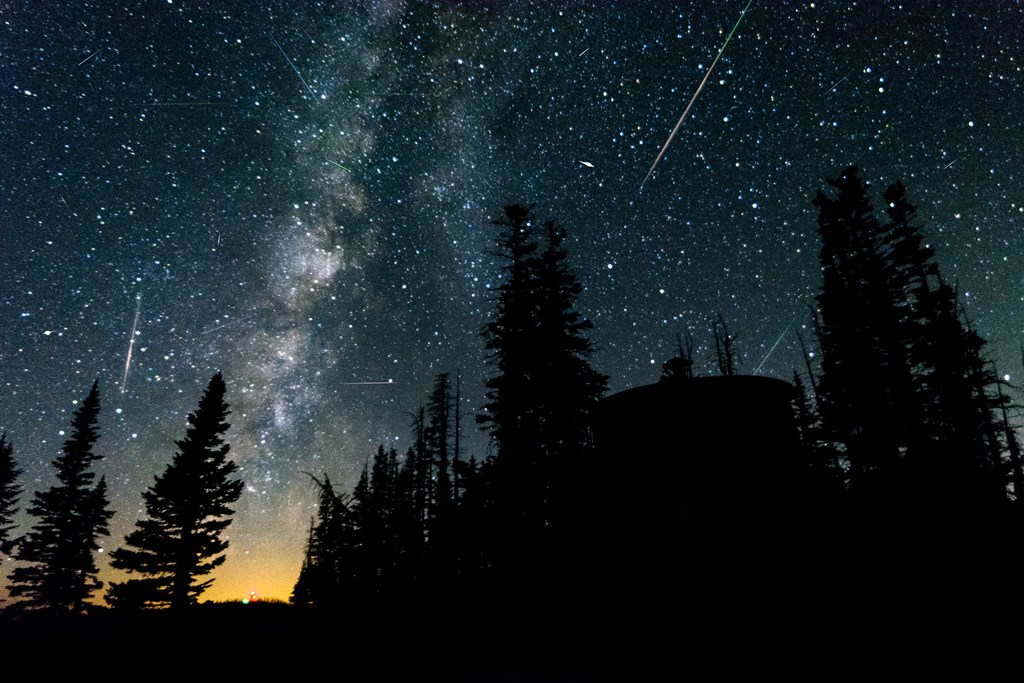
April 21-22 | Lyrid Meteor Shower
A reliable spring meteor shower with minimal moon interference in 2026: great for a cozy “midnight-to-dawn” watch from camp.
MAY
May 5-6 | Eta Aquariid Meteor Shower
These meteors can be quite lovely in predawn hours, but a bright waning gibbous moon will interfere in 2026, though still worth a look if you’re an early riser (and especially if you’re farther south). PS… the original Eta Aquarid Meteor Shower peaked May 5-6, 2025, with fast, bright meteors from Halley’s Comet debris.
JUNE
June 21 | June Solstice
The longest day of the year in the Northern Hemisphere, followed by summer nights that are great for late campfires and stargazing.
JULY
July 30-31 | Southern Delta Aquariids
This shower can be a sleeper hit, but in 2026 it peaks right after a full moon so expect fewer meteors unless you’re in super dark skies. The shower rambles along steadily in late July and August, intermingling with the Perseids.
AUGUST
August 12 | Total Solar Eclipse (plus partial visibility in North America)
Totality is primarily over parts of the North Atlantic region and Europe (including Iceland and Spain), but a partial eclipse is visible from parts of North America, so check local coverage and timing where you’ll be camping.
August 12-13 | Perseid Meteor Shower
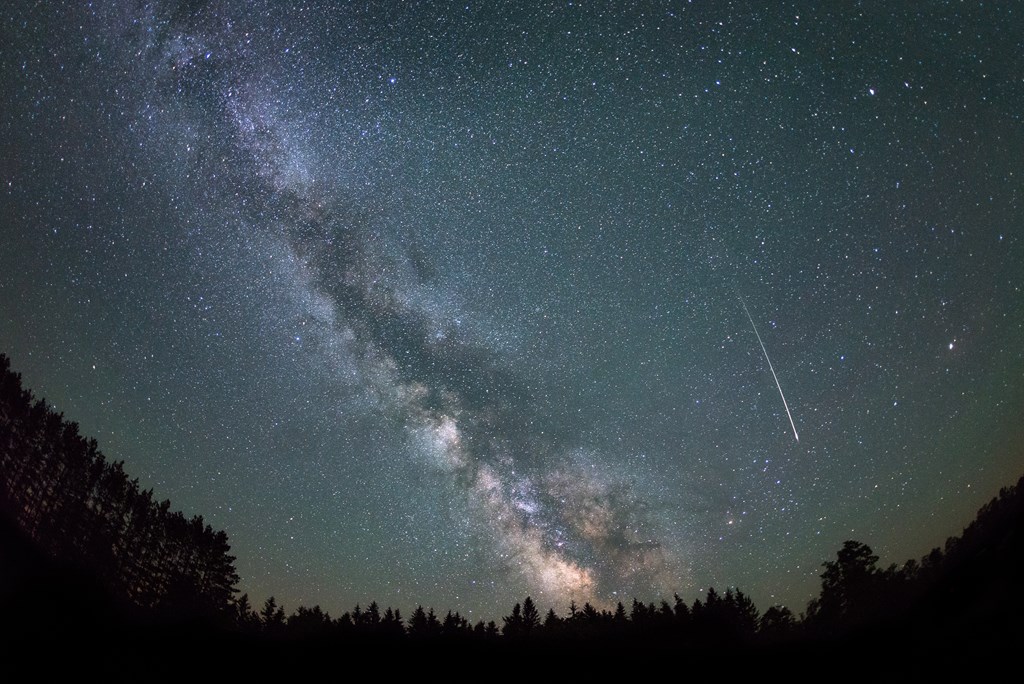
The crown jewel for campers in 2026: peak Perseids with a NEW MOON, meaning truly dark skies for one of the year’s most popular meteor showers. The Perseid meteor shower is expected to peak around the morning of August 13 in 2026.
August 27-28 | Deep Partial Lunar Eclipse
A very deep partial lunar eclipse visible across much of North and South America, an awesome “late-night from the picnic table” kind of event. Most of the Moon passes through Earth’s dark umbral shadow, making it appear significantly darkened and reddish (up to 96% coverage).
August 15 | Venus at Greatest Elongation
Venus will be at its farthest point from the Sun in the evening sky, shining brightly in the west after sunset as an “evening star,” not a morning one for that particular event, though it’s a morning planet for months before and after.
SEPTEMBER
September 22-23 | September Equinox
In UTC, it lands just after midnight on September 23 (the evening of September 22 in much of the United States), an opportune time to welcome fall nights.
OCTOBER
October 4 | Saturn at Opposition
This marks Saturn’s Opposition in 2026, a prime time to view the ringed planet as it’s opposite the Sun, making it brightest and closest to Earth, rising at sunset and visible all night for telescope users to see its rings clearly. While 2025’s Opposition was in September, October 4, 2026, is the key date for this celestial event in the near future, offering excellent viewing for amateur astronomers. If you have binoculars or a small telescope, this is your moment!
October 21-22 | Orionid Meteor Shower
One of our fan favorites. But, in 2026, the moon is bright on peak night, so you’ll want darker skies and patience. It should reign down on October 21.
NOVEMBER
November 16-17 | Leonid Meteor Shower
Known for occasional fireballs and fast meteors, the 2026 peak night has a moderate moon, so results will vary, but it’s still fun to try from camp.
Bonus: Taurid Fireball Season (early-mid November)
The Taurids are famous for slow, bright “fireballs,” and 2026 has low-moon peak nights around November 4-5 and November 11-12.
DECEMBER
December 13-14 | Geminid Meteor Shower
Often the strongest meteor shower of the year, and in 2026, the moon is only ~20% full on peak night, which is a solid setup for a big show.
December 21 | Winter Solstice
The longest night of the year (Northern Hemisphere) is practically made for stargazing, especially if you pair it with a campground stay away from city lights.
Tips for the best campground stargazing
- Pick a dark spot. Even a few miles away from major town lights can make a huge difference.
- Give your eyes time. Plan for ~30 minutes to adjust to darkness.
- Use red light at night. A red headlamp or flashlight helps preserve night vision.
- Watch after midnight (for meteors). Many meteor shower radiants climb higher later at night, increasing your odds of seeing them.
- Use a sky app. We recommend Sky Guide, Star Walk, or SkyView make it easy to ID planets and constellations.
Make KOA your 2026 stargazing basecamp
Whether you’re planning a road trip for the Perseids, setting an alarm for a blood moon eclipse, or chasing a new moon weekend with dark skies, KOA makes it easy to turn skywatching into a fun outdoor stay.
Ready to plan your 2026 night-sky getaway? Find a KOA near your favorite dark-sky region and book your site … then let the stars do the rest!
 Lindsey Hall is an award-winning mental health speaker and writer, focusing on what she refers to as “the nitty gritty topics not discussed.” She is the author behind “I Haven’t Shaved in Six Weeks,” a blog written to humanize the stigmas of eating disorders and treatment.
Through her published writing and work in public relations, she has had the privilege of speaking around the world on nuanced topics such as Body Dysmorphic Disorder, Exercise Addiction, Orthorexia and other eating disorder behaviors, and has been featured in publications including TODAY Show, CBS, Washington Post, Cosmopolitan, Women’s Health, SheKnows, SHAPE Magazine, Refinery29, and more.
An outdoor enthusiast (and Colorado girl) at heart, Lindsey loves to hike wherever possible and is currently focused on taking her white Dodge Ram ProMaster van around the world with her lovely cat, Smudges. Together, they have traveled in over 40 states and even across borders into Canada to conquer the trails!
Follow Lindsey Hall on Instagram.