Protected Land Special Privilege For Campers
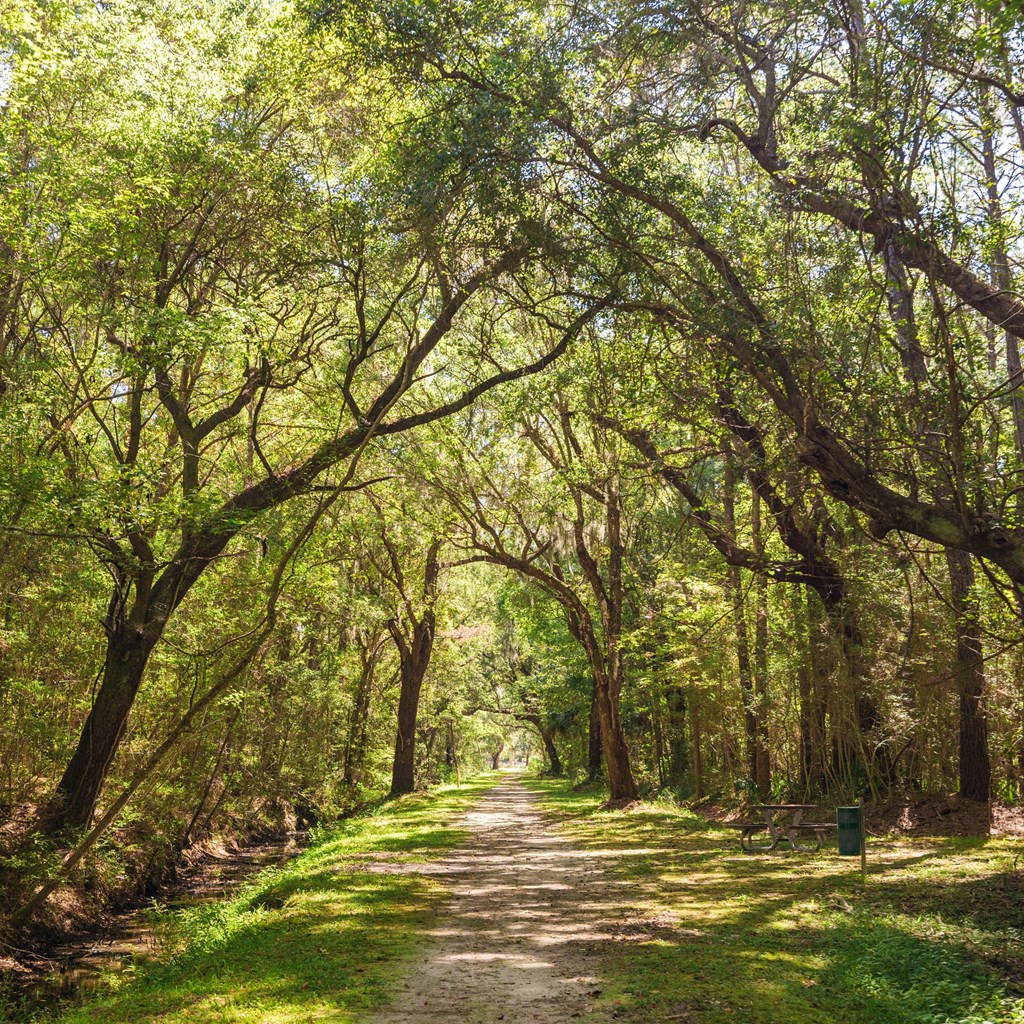
One of the most special features at Mount Pleasant / Charleston KOA Holiday cannot be found at every campground. Just beyond the campsites, our approximately 1.5-mile nature trail invites guests to slow down and experience a quieter side of the Lowcountry. Beneath the shade of mature live oaks, the trail winds through protected land filled with native plants, birds, wildlife, and views of the surrounding marsh. It is a place where families can explore together, guests can begin their mornings with peaceful walks, and campers can reconnect with nature without ever leaving the campground.
This trail and the land surrounding it are part of 130 protected acres held under a conservation easement, and to help us continue caring for this treasured area, a $3 per night Conservation Fee will be added to all reservations beginning October 23, 2026.
What Does It Mean for Our Land to Be Protected?
Conservation means caring for natural land, water, trees, plants, and wildlife so they can\ remain healthy for generations to come. A conservation easement is a legally binding agreement that limits certain types of development and protects the natural character of the land over the long term. Even if the property changes ownership in the future, the conservation easement remains connected to the land, which means our trail and the natural areas surrounding it cannot simply be cleared away or developed later. They are part of a lasting promise to protect this special piece of the Lowcountry.
A Special Privilege for Our Campers
Our nature trail and protected greenspace are not open to the general public, so the only way to experience them is by staying as a registered guest at Mount Pleasant / Charleston KOA Holiday. We consider access to this peaceful, protected landscape a special privilege of camping with us. Our guests can step away from the busier side of Charleston, walk beneath the live oaks, enjoy views of the marsh, and explore a beautiful natural area reserved exclusively for our camping community.
Limiting access also helps protect the trail and its surroundings because fewer visitors mean less impact on the plants, trees, wildlife habitats, and environmentally sensitive areas throughout the property. This allows us to share this unique place with our campers while continuing to care for it responsibly. We ask everyone who enjoys the trail to help us honor this privilege by remaining on the marked path, respecting plants and wildlife, leaving natural objects where they are found, and carrying out anything brought onto the trail.
Why Does Our Protected Trail Still Need Care?
Protecting the land from development is only the beginning, and keeping our nature trail safe, healthy, and enjoyable requires continued hands-on care. Lowcountry weather can be hard on a wooded trail because heavy rain can cause erosion and create muddy or washed-out areas, while storms can bring down branches, damage trees, and leave debris along the path. Native plants need room to thrive, and invasive plants must be managed so they do not take over the habitat.
Our live oaks also need careful monitoring and protection because many of these trees have taken generations to grow. Their broad branches provide shade along the trail while offering shelter, food, and nesting areas for birds and other wildlife. Regular trail care allows our campers to enjoy this protected area while helping us minimize our impact on the land.
What Will the $3 Conservation Fee Support?
The $3 per night Conservation Fee will help us care for the nature trail and the 130 protected acres surrounding it. This includes:
• Clearing fallen limbs and storm debris from the trail
• Addressing erosion, drainage, and muddy areas
• Maintaining a safe and clearly marked walking path
• Protecting mature live oaks and other native trees
• Caring for native and protected plants
• Managing invasive vegetation
• Preserving habitats for birds and wildlife
• Protecting the marsh and other environmentally sensitive areas
• Supporting the long-term stewardship of the conservation easement
The trail's needs will change with the weather and the seasons, but the fee's purpose will remain the same: to help us protect this special place and care for it responsibly.
The Live Oaks Along the Trail
Our live oaks are one of the features that make walking the trail feel unmistakably Lowcountry, and their wide-reaching branches and Spanish moss create shade, beauty, and a peaceful natural canopy. These trees are also an important part of the habitat because their branches provide places for birds to rest and nest, while their leaves, bark, and surrounding vegetation support insects and other small creatures. Their root systems help hold the soil in place and protect the land from erosion.
Because a mature live oak cannot be quickly replaced, protecting these trees is an investment that reaches far beyond today and helps ensure that future campers can walk beneath the same beautiful canopy and experience the same sense of peace.
A Place for Native Birds and Wildlife
As guests walk the trail, they may hear or see some of the native birds that make their homes in the Lowcountry. Depending on the season, these may include Carolina wrens, cardinals, woodpeckers, painted buntings, herons, egrets, ospreys, and the unmistakable pink plumage of roseate spoonbills. The wooded areas, marsh, shoreline, native plants, and mature trees all work together to provide food, water, shelter, and nesting spaces. Protecting the trail also protects the smaller parts of the ecosystem that are easier to overlook, such as butterflies, bees, insects, and other pollinators, and each plays a role in keeping the land healthy.
We cannot promise which wildlife will appear during a particular walk, but that is part of what makes the trail special because every visit offers a different opportunity to listen, look, and discover.
Protecting Native Plants and the Marsh
The native plants along the trail are naturally suited to the Lowcountry’s soil, weather, and rainfall, and they provide food and shelter for wildlife, support pollinators, stabilize the soil, and help preserve the natural character of the land. Some plants may be sensitive, uncommon, or protected and require special care. Staying on the marked trail helps prevent trampling or damage while allowing guests to enjoy the landscape responsibly.
The marsh is equally important because it provides habitat for birds and wildlife while contributing to the health of the surrounding land and water. Protecting the trail, native vegetation, and marsh as one connected environment helps the entire area remain healthy.
Take a Walk and See What You Are Helping Protect
During your next stay, we invite you to enjoy this special privilege: walk the trail, pause beneath the live oaks, listen for native birds, and take in the marsh's quiet beauty. This protected land is more than a backdrop to the campground. It is part of the experience, part of our responsibility, and part of what makes Mount Pleasant / Charleston KOA Holiday such a special place to stay.
Through the Conservation Fee, every visit helps us care for the trail and protect these 130 acres so future generations of campers can experience them too. https://lnt.org/
Thank you for helping us protect a trail—and a piece of the Lowcountry—worth preserving.