Prairie Dog Town: The Tiny Residents of Devils Tower 🐾
Meet the Prairie Dog Community of Devils Tower!
If you've ever visited Devils Tower and heard a series of squeaks, chirps, and tiny barks coming from the prairie grass, congratulations—you've probably been welcomed by one of the area's most entertaining residents.
The prairie dogs.
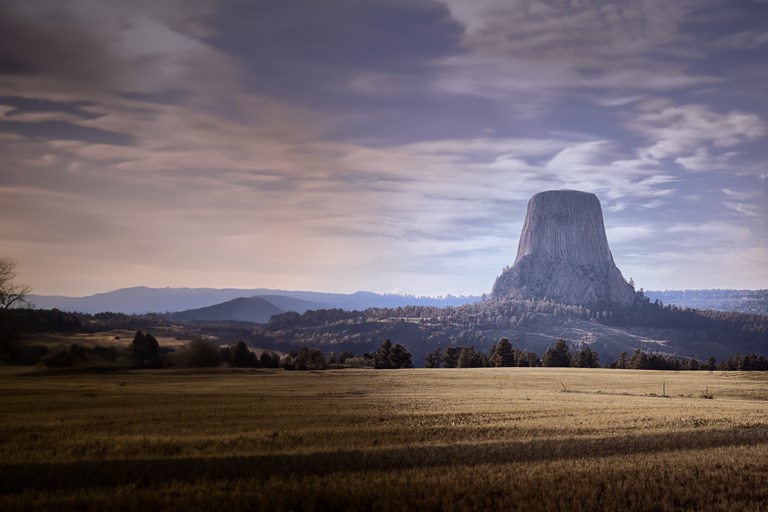
While Devils Tower may be famous for its towering rock formation, scenic trails, wildlife, and connection to Hollywood, many visitors leave talking about something much smaller: the bustling prairie dog towns scattered throughout the region.
These furry little animals may only stand about a foot tall, but they run some of the most fascinating communities in the American West.
What Exactly Is a Prairie Dog?
Despite their name, prairie dogs aren't dogs at all. They're actually members of the squirrel family.
Black-tailed prairie dogs, the species found around Devils Tower, live throughout portions of Wyoming, Montana, Colorado, Nebraska, Kansas, Oklahoma, and several other western states.
Their name comes from the barking sounds they make when communicating with one another. To early settlers, the sound resembled a small dog barking across the prairie.
Spend just a few minutes near a prairie dog town, and you'll quickly understand how they got their name.
Welcome to Prairie Dog City
Imagine a neighborhood where everyone knows everyone, communication never stops, and dozens of homes are connected by an underground network of tunnels.
That's essentially a prairie dog town.
Prairie dogs live in large colonies made up of family groups called "coteries." Each coterie typically consists of one adult male, several females, and their offspring.
Below the surface, they construct elaborate tunnel systems that can stretch for hundreds of feet. These tunnels contain sleeping chambers, nursery rooms, emergency exits, and ventilation shafts.
In many ways, prairie dog towns function like underground cities.
And they're busy.
Very busy.
At any given moment, you'll see prairie dogs standing guard, grooming one another, collecting food, playing, chasing neighbors, or sounding alarms about potential danger.
The Neighborhood Watch Champions
Prairie dogs take security seriously.
When a predator approaches, one prairie dog often sounds an alarm call that alerts the entire colony.
Within seconds, heads disappear into burrows.
Scientists have discovered that prairie dogs use surprisingly complex vocalizations. Research suggests they can communicate different information about predators, including whether the threat is coming from the ground or the air.
In other words, they're not simply yelling, "Danger!"
They're providing details.
That's pretty impressive for an animal that weighs less than three pounds.
Masters of the Dramatic Stare
One of the most amusing prairie dog behaviors is their tendency to stand upright and stare directly at visitors.
If you've ever walked near a prairie dog town, you've probably experienced this.
One prairie dog notices you.
Then another.
Then another.
Soon, an entire hillside appears to be watching your every move.
Don't worry—they're simply assessing whether you're a threat or just another curious tourist.
Most visitors quickly realize that the prairie dogs are actually doing a much better job of observing them than the other way around.
More Important Than They Look
Prairie dogs may be adorable, but they're also incredibly important to the ecosystem.
Scientists consider prairie dogs a "keystone species," meaning many other animals depend on them.
Their burrows provide shelter for rabbits, snakes, insects, burrowing owls, and numerous other species.
Their grazing helps maintain healthy grasslands.
Their digging aerates soil and improves water infiltration.
Even predators benefit from prairie dog populations. Coyotes, foxes, badgers, hawks, eagles, and other wildlife rely on prairie dogs as part of their food source.
Remove prairie dogs from an area, and the entire ecosystem can change dramatically.
The Prairie Dog Daily Schedule
A prairie dog's day is surprisingly predictable.
Morning begins with a careful emergence from the burrow. A few cautious looks around help determine whether predators are nearby.
Once the all-clear is given, breakfast begins.
Prairie dogs primarily eat grasses, roots, seeds, and other vegetation found throughout the prairie.
Throughout the day, you'll observe a mixture of feeding, socializing, digging, grooming, and standing guard.
During hot summer afternoons, activity often slows down.
As evening approaches, the colony becomes active again before retreating underground for the night.
It's a routine that has worked remarkably well for thousands of years.
How Many Prairie Dogs Can You Spot?
Visiting Devils Tower offers an excellent opportunity to test your prairie dog spotting skills.
Many visitors see one or two and assume that's all there is.
But look closer.
What first appears to be an empty grassland may actually contain dozens—or even hundreds—of prairie dogs.
Try this challenge during your visit:
Count how many prairie dogs you can spot in one minute.
See who spots the first prairie dog standing upright.
Listen for warning barks and chirps.
Watch for playful chasing behavior.
Look for prairie dog pups during the spring and early summer months.
Kids especially love turning prairie dog watching into a game.
Prairie Dog Etiquette
As entertaining as they are, prairie dogs are still wild animals.
Visitors should always observe them respectfully.
Remember:
Never feed prairie dogs.
Do not attempt to touch them.
Stay outside their burrows.
Give them plenty of space.
Keep pets under control near prairie dog colonies.
Respectful wildlife viewing helps ensure that both visitors and prairie dogs remain safe.
The Tiny Ambassadors of the Prairie
Devils Tower may be the star attraction, but prairie dogs are often the unofficial ambassadors of the surrounding grasslands.
They're curious, social, hardworking, and surprisingly entertaining. They help maintain healthy ecosystems, support countless other species, and provide endless enjoyment for visitors of all ages.
The next time you visit Devils Tower, take a few minutes to slow down and watch a prairie dog town.
You might arrive looking for a giant geological wonder.
But don't be surprised if you leave with a camera full of prairie dog photos and a newfound appreciation for the tiny residents who call Wyoming's prairies home.
After all, life is never boring when your neighbors live in an underground city and spend their days gossiping across the grasslands.