12th Night, the Kick Off to Mardi Gras
Here in New Orleans, we celebrate the 12 days of Christmas. New Year’s Eve/Day is a part of our Christmas celebrations. Houses stay festive & Christmas festivities continue, until the 12th day of Christmas, or 12th night (Jan. 6th), also known as Three Kings Day. That day, Christmas season ends & Carnival season begins. Read all about it below.
“January 6 is an important date on Louisiana's calendar, because it marks the official opening of “Carnival season,” the time when private Mardi Gras balls and street parades are staged. This date, called Twelfth Night, is the Feast of the Epiphany in the Catholic faith and marks the visit of the Magi to the Christ Child. The best part about Epiphany? It's most often honored by serving a delicious king cake.
When is Mardi Gras?
The Church set this fixed date for the start of the festive Carnival season (from the feast before Ash Wednesday through the fasting of Lent), but kept a moveable one for the single day of Mardi Gras (French for Fat Tuesday), which is 47 days before Easter. So Mardi Gras can be as early as February 3 or as late as March 9, making the Carnival season as short as 28 days or as long as 63 days.
Mardi Gras Kick-Off: Parades & Events
Several events and parades are typically scheduled on January 6 in New Orleans, starting with a morning press conference and king cake party with the mayor. Representatives from all of the parades that roll in the city typically attend this event. Explore other parades and events on January 6, like:
- The Krewe de Jeanne d'Arc foot parade strolls through the French Quarter.
- The Phunny Phorty Phellows, the group that started the trolley tradition in 1991, rolls from the Willow Street Car Barn on the St. Charles Avenue streetcar.
- The Funky Uptown Krewe hops on its own streetcar at South Carrollton Avenue and follows the St. Charles streetcar line to Uptown.
- The Société des Champs Elysée rolls down North Rampart Street and Loyola Avenue.
- A private ball, presented by the city’s second-oldest Carnival organization, the Twelfth Night Revelers. Borrowing from a centuries-old European custom, the men roll out a giant cake and distribute slices to young ladies at the ball. The lucky young woman who receives the golden bean hidden inside the cake is declared queen; the remaining women receive silver beans and serve as maids in her majesty’s court.
King Cakes Throughout History
In ancient times, tribes that survived the harshness of winter celebrated by baking a crown-shaped cake, using the preceding year’s wheat. Within the cake was placed a seed, bean or nut. Later, the Romans chose a king for their festivals by drawing lots. The Catholic Church linked these ancient customs to the Feast of the Epiphany in the 4th century.
During the 17th and 18th centuries, the Roi de la Fève (King of the Bean) was celebrated in both art and literature in Europe, and “Twelfth Cakes” were annually featured in England. Twelfth Night rituals took place in Creole homes in New Orleans when its French settlers brought the gateau des rois (king cake) custom with them. In 1870, the Twelfth Night Revelers formalized the Mardi Gras connection with its first parade and ball.
King Cakes Today
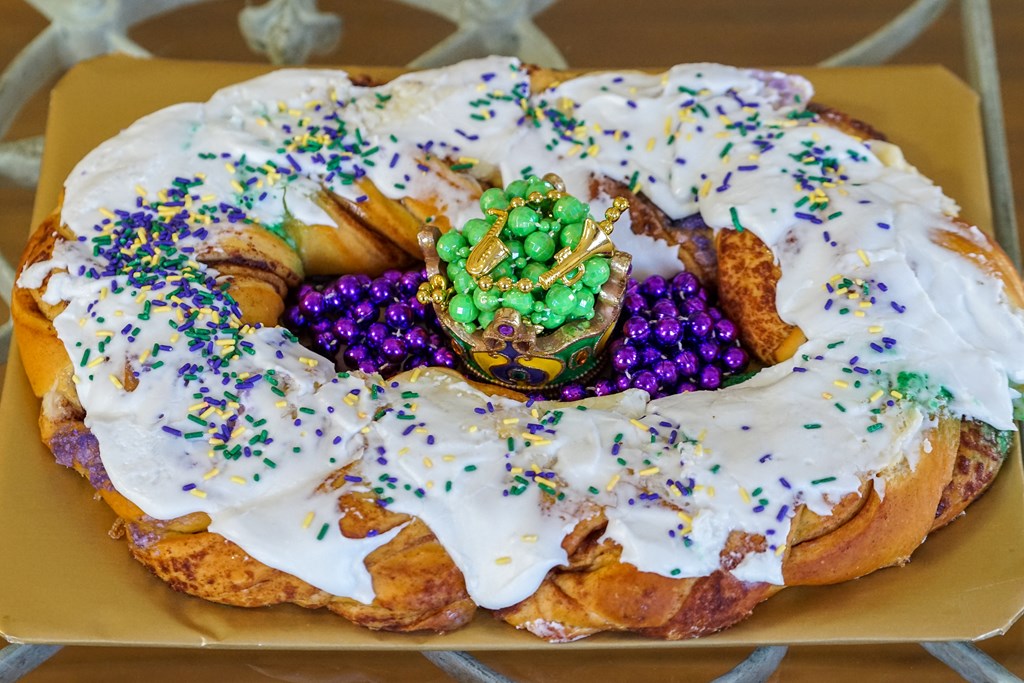
With a small plastic baby doll tucked inside it today, the oval-shaped cinnamon brioche dough is covered in granulated sugar in the Mardi Gras colors of purple, gold and green. Custom dictates that whoever receives the tiny favor buys the next cake or gives the next party. Traditionalists will not eat a slice of king cake before Twelfth Night. By the early 21st century, more than 1 million king cakes were being consumed locally each year, with another 75,000 shipped out of state via overnight couriers.”
Arthur Hardy is a Carnival expert and Mardi Gras historian from New Orleans, Louisiana. He is the publisher/writer of Arthur Hardy's Mardi Gras Guide.
****CHECK OUT OUR EVENT PAGE FOR ALL OF THE MARDI GRAS PARADES & STOP IN OUR OFFICE TO BOOK OUR SHUTTLE TO MANY OF THEM!!!***