Prepare Your RV for the Great American Road Trip
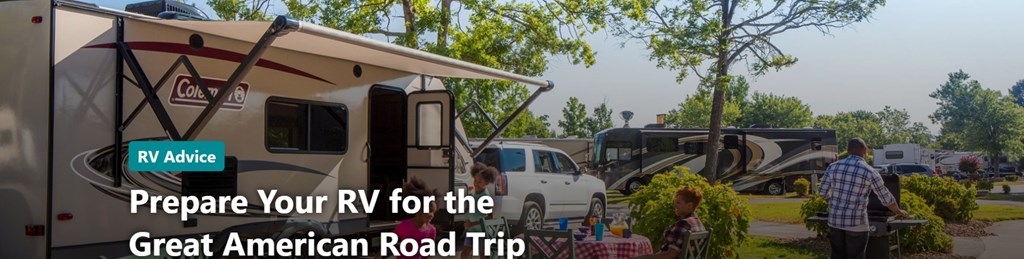
Before You Hit the Road: Get Your RV Trip-Ready
A worry-free RV vacation begins with four basics:
- Check your systems
- Inspect safety gear
- Pack smart
- Map out your route ahead of time
First, test everything in the RV before departure – and we mean everything! Run the appliances, check the plumbing, charge and test your batteries, and make sure the lights, air conditioning, and hookups are working the way they should. If you’re new to RVing or it’s been a while since your last trip, do a short practice run at home or at a nearby campground. It’s much easier to discover a leaky faucet or dead battery close to home than halfway across the country.
Next, give the rig a full safety and mechanical once-over. That means checking tire pressure and tread, tightening lug nuts if needed, inspecting the brakes, and confirming that all signals and running lights work. A roadworthy RV is essential for avoiding expensive breakdowns and dangerous roadside surprises.
Pack Smart for Long Road Trips
How you load your RV matters just as much as what you bring. Be mindful of cargo limits, and place heavier items low and evenly throughout the rig to help prevent sway and improve handling. Inside, secure cabinets, tuck away anything loose, and use nonslip liners or tension rods in the fridge so food doesn’t shift while you’re driving.
For family travel, it helps to think in categories: safety, comfort, and convenience. Bring an emergency road kit with basics like flares, tools, and a jump starter. Pack two first aid kits—one larger one for the RV and a smaller grab-and-go version for hikes or day trips. Then add the comfort essentials: extra blankets, layers for changing weather, and folding camping chairs for evenings outside.
Make Long Driving Days Easier on Everyone
Family road trips are better when you don’t try to do too much in one day. As a good rule of thumb, keep travel days to about 200 to 300 miles, stop every couple of hours for stretching and bathroom breaks, and aim to arrive before dark for optimal campsite setup.
It’s also wise not to stack too many back-to-back travel days. After a couple of travel days, schedule a longer stop so everyone can rest and recharge. Kids especially do better when the trip has a mix of drive days and play days.
Use an to avoid low bridges, tight turns, or steep grades, and consider getting a multistate toll pass like E-ZPass to make the trip smoother.
Keep the Kids Entertained—and Everybody Fed!
A successful family road trip depends on snacks, simple meals, and boredom backup plans. before you leave so dinner is quick after a long day. Chili, taco filling, pasta sauce, or breakfast burritos can be lifesavers at camp.
For entertainment, don’t rely on cell service. Download offline maps, save movies and shows to tablets, and pack simple travel-friendly activities like sketchbooks, magnetic games, card games, and puzzles. A tiny dinette can become game central with a deck of cards and a little creativity!