How to Plan the Perfect Yellowstone RV Trip from Island Park
By: Island Park KOA Team | Island Park KOA Holiday | Published: June 2026 | Last Updated: June 2026
Quick Answer
Island Park, Idaho sits 30 miles from Yellowstone's West Entrance. That's close enough to reach Old Faithful before the morning crowds and far enough to skip the in-park campground lottery entirely. Stage your trip at Island Park KOA Holiday (full-hookup RV sites, deluxe cabins, 50-amp service), day-trip into the park in a tow vehicle, and use the extra nights to fish Henry's Lake and run ATV trails through 500 miles of national forest.
Thirty miles. That's the drive from Island Park KOA Holiday to the West Entrance of Yellowstone National Park. On a clear summer morning, you're at the gate in 40 minutes. On a busy July Saturday, with two kids, a 32-foot rig, and the first cup of coffee still cooling, you're still at the gate in 40 minutes. That math is why experienced RVers keep coming back to Island Park instead of fighting for spots in West Yellowstone. Close enough to hit the geysers before the crowds. Far enough to actually sleep. Here's what you need to know to plan it right.
Why Island Park Is the Right Base Camp for a Yellowstone RV Trip
Most travelers hear 'Yellowstone' and their eyes go straight to West Yellowstone, Montana. Makes sense. The town sits at the park gate, proximity feels like the obvious win, and it's the first result that shows up in most searches. But staying right at the gate means competing for a limited pool of campsites, paying a premium, and giving up access to one of Idaho's most underrated outdoor destinations in the process.
Island Park runs differently. The town stretches along US-20 through a broad volcanic caldera, though you wouldn't guess the scale of it from the pine-tree density. The surrounding area holds Henry's Lake, the Island Park Reservoir, Henry's Fork of the Snake River, and more OHV trails than most riders can cover in a week. It's not a waypoint to Yellowstone. It's a destination with Yellowstone next door.
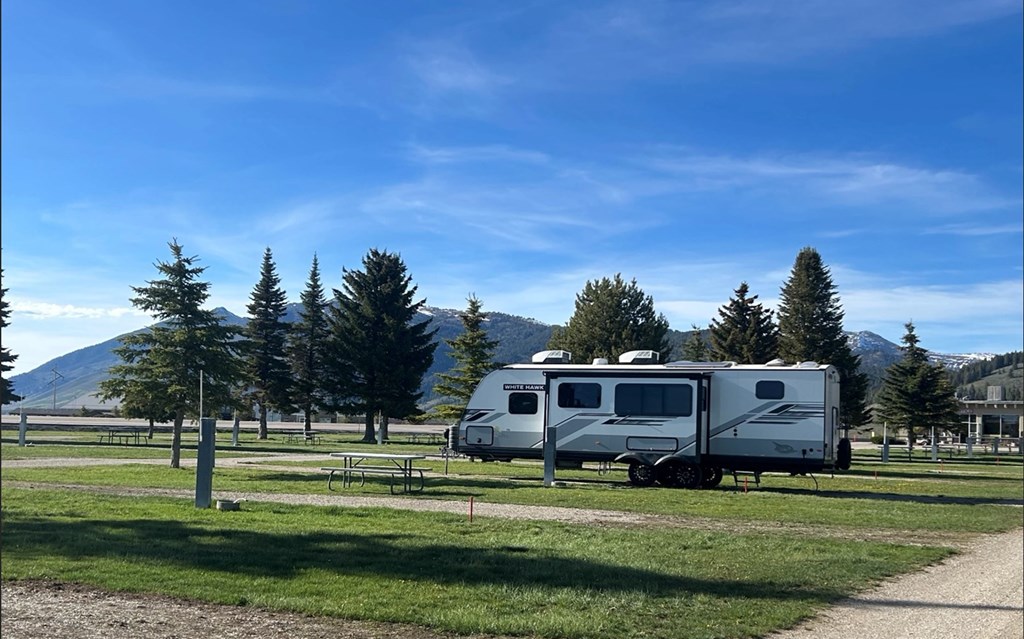
Island Park KOA Holiday sits in the heart of this stretch. Full-hookup RV sites come with 30 and 50-amp service. Patio Premium sites have private fire pits (worth requesting if your group spends evenings outside the rig). Pull-through configurations handle big rigs. Deluxe cabins with full baths are the right call for families who want comfortable beds without the sleeping bag math. On-site amenities include the KampK9 dog park, laundry facilities, camp store, and food truck.
From the campground, the West Entrance gate is a 40-minute drive on US-20, a road built for vehicles pulling trailers rather than white-knuckling switchbacks. Hit the gate before 8:30 AM and you can be parked at Old Faithful before the first wave of day-trippers. Back at camp by dinner. That's the day-tripping model that makes a 4- or 5-night Island Park stay outperform the 2-night West Yellowstone scramble most summers.
What RVers Need to Know Before Driving Into Yellowstone
Yellowstone's road system predates the Class A motorhome. That's not a complaint. It's a planning requirement.
Size limits matter more than they look on paper. Most of the park's main roads handle RVs up to 40 feet. The campgrounds inside the park are more restrictive, and the specifics vary by campground. Check the current size limits on the NPS website for any interior campground before you pull in. Discovering a length restriction at the entrance to a narrow loop is not how you want to find out.
The tow-car strategy is what most experienced Yellowstone visitors use. Leave the big rig at base camp. Drive a compact car into the park. Parking a 36-foot motorhome at Old Faithful during peak July hours is possible, but plan on a 20-minute search for a pullout shared with school buses and a line of rental cars. A tow vehicle changes the math entirely. You park like a normal person, cover more ground, and stop apologizing to the driver behind you on the canyon roads.
Gate timing matters more than most first-timers expect. The West Entrance is Yellowstone's second-busiest gate. Between 9 AM and 11 AM in peak summer, wait times run 15 to 45 minutes. Arrive before 8:30 or after 3 PM and you'll move through in under five minutes. Build that window into your morning plan: you're already at the geyser basin when other visitors are still in the queue.
In-park campsite reservations sell out months in advance. If you're planning a July trip and reading this in the spring, the in-park sites are likely gone. Summer reservations for Yellowstone's campgrounds open 13 months ahead and fill within hours for prime dates. Island Park KOA's full-hookup sites, available through the KOA reservation system in real time, are the practical solution. One more detail worth building into the plan: fuel up in Island Park before entering. Gas inside Yellowstone exists, but it's limited and priced accordingly.
The Yellowstone Stops Worth a Full Day
Yellowstone has 2.2 million acres and roughly 10,000 hydrothermal features. Trying to see all of it is a strategy that ends with two tired kids and a campfire story that starts with 'we should have been more realistic.' Pick two stops per day. Do them properly.
Old Faithful and the Upper Geyser Basin
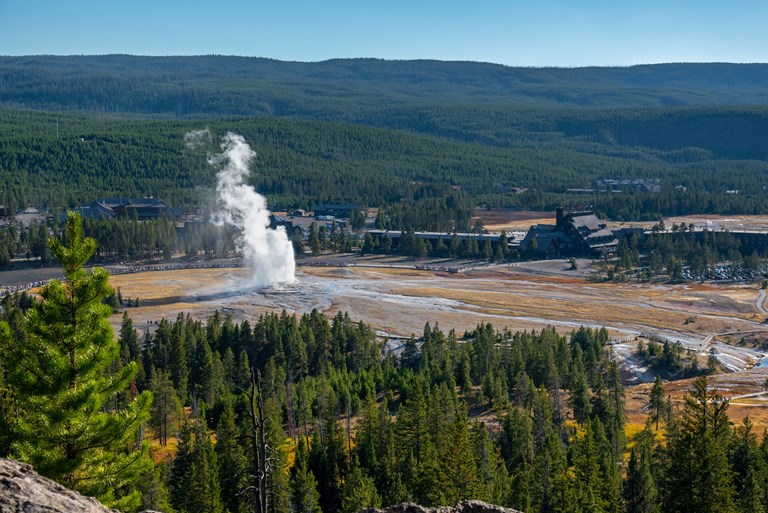
Old Faithful erupts roughly every 90 minutes, shooting water 100 to 180 feet in the air. Pull the predicted eruption time from the Visitor Education Center and build your morning around it. The Upper Geyser Basin boardwalk runs about two miles and covers more predictable geysers in a single stretch than anywhere else on Earth. Two hours, comfortable shoes, and you've done it properly.
Grand Prismatic Spring
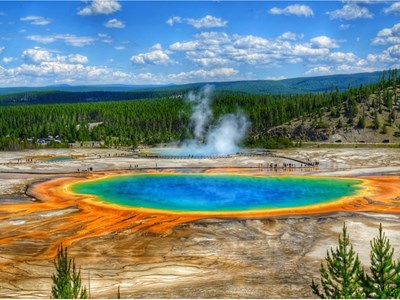
The numbers: 370 feet wide, water temperatures of 147 degrees at the center, microbial mats that ring the pool in bands of orange, yellow, green, and brown. The parking lot fills by 9 AM in July. Take the overlook trail instead: 1.5 miles round trip, modest elevation, and you get the aerial view that's in every photograph. Ground-level is pretty. The overlook is the real thing.
Lamar Valley
This is the dedicated wildlife day, and it requires a plan. Lamar sits in the northeast corner of the park, a two-hour drive from the West Entrance, which is exactly why it stays less crowded than the geyser basins. Often called 'America's Serengeti,' the valley delivers: bison herds in the meadows, wolves visible at dawn and dusk with binoculars, grizzlies, pronghorn, and raptors. Pack food, bring a spotting scope if you have one, and leave Island Park by 5:30 AM. Lamar doesn't work as a half-day side trip.
Grand Canyon of the Yellowstone
The Lower Falls drop 308 feet. Twice the height of Niagara. Artist Point on the south rim is the signature view. Budget at least two hours, walk both rims if legs allow, and know that the canyon light hits the yellow rhyolite walls differently in the morning than in the afternoon. Worth accounting for when you plan your start time.
One standing rule: don't stack all four stops in one day. You're 30 miles from the gate. Come back tomorrow.
A 3-Day Yellowstone Itinerary from Island Park KOA Holiday
Three days covers every major stop without exhausting anyone. The plan below is built for families and RV travelers leaving from Island Park KOA, targeting early gate entry, and returning to camp each evening.
Day 1: Thermal Features
- Leave camp by 7 AM. Hit the West Entrance before the morning backup.
- Check Old Faithful's predicted eruption time at the Visitor Education Center. Walk the Upper Geyser Basin while you wait. Don't skip Beehive Geyser if it's predicted to erupt.
- Watch Old Faithful. The eruption runs about 3 minutes. Budget 30 minutes total at the viewing area.
- Drive to Grand Prismatic Spring. Take the overlook trail before 11 AM to beat the parking lot crunch. Allow 90 minutes.
- Stop at Midway Geyser Basin on the way out. Easy to skip. Worth the 20-minute walk.
- Exit the West Entrance by 3:30 PM. Back at Island Park KOA by 5.
Day 2: Wildlife in Lamar Valley
- 5:30 AM departure. Lamar Valley is a two-hour drive from the West Entrance in the park's northeast section.
- Arrive by 7:30 AM. Pull off at any roadside turnout and glass the meadows. Bison are nearly guaranteed any morning. Check with a park ranger for recent wolf and bear sightings.
- Drive to Tower Fall mid-morning. The hike to the base of the 132-foot waterfall is 1.8 miles round trip, manageable for most kids.
- Lunch at Roosevelt Lodge. One of the few full-service dining options in the park's northeast quarter.
- Stop at the Petrified Tree on the way back, a fossilized sequoia preserved in volcanic ash for 50 million years, visible from a two-minute walk.
- Begin the return by 4 PM. Wildlife activity picks back up at dusk through Lamar. Eyes up on the drive out.
Day 3: Canyon and Yellowstone Lake
- Leave camp at 7 AM. Drive to Canyon Village.
- South Rim Drive and Artist Point first. The Lower Falls view. Budget 60 to 90 minutes. The canyon walls read differently in morning light.
- Walk the North Rim: Lookout Point, Grand View, Inspiration Point. The canyon drops 1,000 feet in places; every viewpoint gives a different angle.
- Drive south through Hayden Valley. Another strong wildlife corridor, especially for bison and bear. Don't rush through it.
- Lunch at Yellowstone Lake shoreline at Bridge Bay or Fishing Bridge. The lake sits at 7,733 feet. On a clear July afternoon, it's worth sitting with for a while.
- Head back by 3 PM. West Entrance by 5, Island Park KOA by 6.
What to Do in Island Park When You're Not at Yellowstone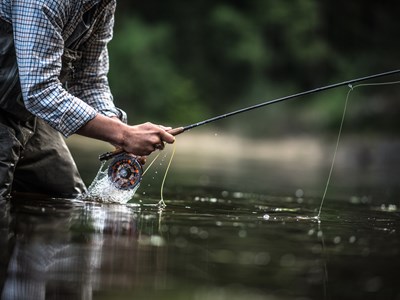
This is the argument for 4 or 5 nights instead of 2. Island Park has enough to fill the days between park visits without repeating anything.
Fishing. Henry's Lake sits 5 miles from town and holds cutthroat, brook, and cutbow hybrid trout. Check with local outfitters or the Idaho Department of Fish and Game for current licensing requirements for your party. Henry's Fork of the Snake River, which runs through the caldera, is considered one of the most technically demanding dry-fly rivers in the American West. Half-day float trips through local outfitters put beginners and experienced anglers on the water. Two hours on Henry's Fork is a trip inside the trip.
ATV and OHV trails. Island Park connects to more than 500 miles of marked OHV trails through national forest. Big Springs and Stamp Meadows are manageable for beginner and intermediate riders and pass through lodgepole pine forest with regular wildlife sightings. Equipment rentals are available locally for riders who didn't tow their own machine.
Harriman State Park. Sixteen thousand acres of wildlife sanctuary along the Henry's Fork with 30 miles of non-motorized trails for hiking, biking, and wildlife watching. Sandhill cranes, trumpeter swans, and moose are common sightings. No crowds. A solid reset day between park visits.
Big Springs. Big Springs produces a remarkable volume of water from a single source and maintains a near-constant temperature year-round. A short boardwalk leads to the main pool and the water is clear enough to watch large rainbow trout from above. Ninety minutes, easy walk, worth putting on the agenda.
Choosing the Right Site at Island Park KOA Holiday
Site selection matters on a multi-night trip, especially when you're running appliances, managing a dog, and need somewhere for kids to move around. Here's how the options break down:
Pull-through configurations are available for longer rigs. If you're towing a car, confirm clearance for your combined length when you book. Deluxe cabins book faster than RV sites for July and August. Plan accordingly and reserve early.
On-property: KampK9 dog park, playground, laundry, camp store, gas station, food truck. Summer weekends at Island Park KOA fill several weeks out. For a July or August trip, booking 6 to 8 weeks ahead is the safe move.
Frequently Asked Questions
How far is Island Park KOA from Yellowstone National Park?
Island Park KOA Holiday is approximately 30 miles from Yellowstone's West Entrance, a 40-minute drive on US-20. This puts it among the closest full-hookup campgrounds to the park outside of West Yellowstone, Montana. Guests leaving camp by 7 AM can reach Old Faithful before peak crowd hours and return to camp by dinner.
Can I drive my large RV into Yellowstone?
Yes, with site-specific restrictions. Most park roads handle RVs up to 40 feet, but interior campground size limits vary by site. Check the NPS website for current length restrictions at any campground you plan to use before you arrive. Parking at high-traffic stops like Old Faithful is difficult in a large rig during peak summer hours. Most experienced RVers tow a car and leave the big rig at Island Park KOA.
What's the best time to enter Yellowstone through the West Entrance?
Before 8:30 AM or after 3 PM. Between 9 and 11 AM in peak summer, the West Entrance backs up 15 to 45 minutes. Entering early means better wildlife activity, cooler temperatures for boardwalk walking, and shorter waits at popular stops like Old Faithful and Grand Prismatic Spring.
When should I book Island Park KOA for a summer trip?
For July and August visits, book 6 to 8 weeks out. Deluxe cabins book faster than RV sites. Summer weekends are more competitive than weekday dates. Reservations are available through the KOA booking system with real-time site availability.
What should I pack for a Yellowstone day trip from Island Park KOA?
Water and snacks are the essentials. Yellowstone's concessions are limited and spread out. Add layers regardless of the forecast: summer temperatures at 7,000-foot elevation swing fast. Binoculars are worth bringing for Lamar Valley. A small backpack beats a full daypack for boardwalk walks. If you're driving a tow car into the park, leave the big gear at camp and keep the load light.
Summer weekends at Island Park KOA fill weeks before they arrive, and a Yellowstone trip is worth planning right. Browse available sites and cabin options, then lock in your dates before the season fills.
Reserve your site at Island Park KOA Holiday →